
India’s startup ecosystem is usually known for companies in sectors like food delivery, fintech, and e-commerce. However, some startups are quietly transforming traditional industries like manufacturing using technology. One such company is Zetwerk.
Zetwerk has built a powerful platform that connects manufacturers with businesses that need industrial products and components. In simple terms, it acts like a technology-enabled marketplace for manufacturing services.
In this article, we will explore the Zetwerk business model, how it works, and how the company makes money.
What is Zetwerk?
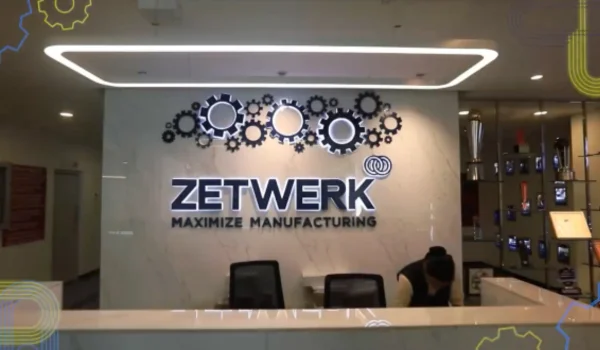
Zetwerk is a B2B manufacturing services platform founded in 2018 by Amrit Acharya, Rahul Sharma, and Srinath Ramakkrushnan.
The company connects large businesses that need manufactured products with a network of small and medium manufacturers.
Instead of companies searching for manufacturers themselves, Zetwerk handles the entire process including:
- sourcing manufacturers
- quality control
- production management
- logistics and delivery
This makes the manufacturing process faster, more reliable, and more transparent.
Zetwerk operates in multiple industries such as:
- industrial machinery
- automotive components
- electronics manufacturing
- aerospace parts
- renewable energy equipment
The Problem Zetwerk Solves
Before companies like Zetwerk existed, manufacturing supply chains were often fragmented and inefficient.
Businesses faced many challenges such as:
- Finding reliable manufacturers
- Ensuring consistent quality
- Managing production timelines
- Handling logistics across multiple suppliers
At the same time, many small manufacturers struggled to find large clients and consistent orders.
Zetwerk solved this problem by creating a technology platform that connects demand and supply in manufacturing.
Understanding the Zetwerk Business Model
Zetwerk operates on a B2B marketplace and supply chain management model.
The company acts as a bridge between buyers (companies) and manufacturers.
Instead of manufacturing products itself, Zetwerk manages the entire manufacturing process through its partner network.
The model has three main participants:
- Businesses that need products manufactured
- Manufacturing partners
- Zetwerk’s technology and supply chain platform
How Zetwerk’s Platform Works
The working process is quite structured.
Step 1: Client Requirement
A company that needs industrial products approaches Zetwerk with its requirements.
This may include:
- product design
- quantity
- materials
- delivery timelines
Step 2: Manufacturer Matching
Zetwerk uses its network of thousands of manufacturing partners to find the most suitable supplier.
The platform matches manufacturers based on:
- capability
- machinery
- expertise
- location
Step 3: Production Management
Once a manufacturer is selected, Zetwerk manages the entire production process.
This includes:
- raw material sourcing
- manufacturing supervision
- quality checks
- compliance verification
Step 4: Logistics and Delivery
After production is completed, Zetwerk arranges shipping and logistics to deliver the finished products to the client.
This end-to-end management is what makes Zetwerk different from a simple marketplace.
How Does Zetwerk Make Money?
Zetwerk has several revenue streams that help it generate income.
Let’s look at the main ones.
- Manufacturing Service Margin
The primary source of revenue for Zetwerk is service margin on manufacturing projects.
When a company places an order, Zetwerk:
- assigns the project to a manufacturing partner
- manages the entire process
- charges the client a price slightly higher than the manufacturing cost
The difference between the manufacturing cost and the selling price becomes Zetwerk’s margin.
For example:
Manufacturing cost: ₹10 lakh
Client price: ₹11 lakh
Zetwerk margin: ₹1 lakh
Since many projects involve large industrial orders, even small margins generate significant revenue.
- Supply Chain Management Fees
Zetwerk also earns money for managing supply chains and production processes.
Companies are willing to pay for:
- production planning
- supplier management
- logistics coordination
- quality control
This allows businesses to outsource complex manufacturing operations to Zetwerk.
- Value-Added Services
Another important revenue source comes from value-added services such as:
- design optimization
- engineering support
- product customization
- compliance management
These services help businesses improve product quality and reduce manufacturing risks.
- Long-Term Enterprise Contracts
Many large companies prefer long-term manufacturing partnerships.
Zetwerk signs long-term contracts with enterprises in sectors like:
- infrastructure
- renewable energy
- industrial equipment
These contracts ensure stable and recurring revenue.
- International Manufacturing Services
Zetwerk also works with global companies looking to source manufacturing from India and other countries.
The company helps international clients by:
- finding manufacturing partners
- managing production
- ensuring export compliance
This global supply chain support generates additional revenue.
Industries Served by Zetwerk
Zetwerk operates across many industries.
Some of the key sectors include:
Industrial Machinery
Manufacturing components used in large machines and industrial systems.
Renewable Energy
Producing equipment used in solar and wind energy projects.
Automotive
Manufacturing vehicle parts and components.
Electronics
Producing electronic components and assemblies.
Aerospace
Manufacturing high-precision parts for aerospace equipment.
By serving multiple industries, Zetwerk reduces dependence on a single market.
Advantages of Zetwerk’s Business Model
The Zetwerk model has several strengths.
- Asset-Light Approach
Zetwerk does not need to build large factories.
Instead, it uses existing manufacturers in its network, which reduces capital investment.
- Scalable Platform
As more manufacturers join the platform, Zetwerk’s capacity increases without major infrastructure costs.
- Solving Real Industry Problems
Manufacturing supply chains are complex.
Zetwerk simplifies the process for businesses by acting as a single point of contact.
- Technology-Driven Operations
The company uses technology to manage:
- order tracking
- quality monitoring
- supplier selection
- production timelines
This improves efficiency and transparency.
Challenges in Zetwerk’s Business Model
Despite its success, Zetwerk faces several challenges.
Supply Chain Complexity
Managing multiple suppliers across different industries is not easy.
Quality Control
Maintaining consistent product quality across many manufacturers requires strong supervision.
Global Competition
Zetwerk competes with manufacturing platforms and suppliers from countries like:
- China
- Vietnam
- Taiwan
Future of Zetwerk
The future looks promising for Zetwerk because global companies are increasingly exploring “China plus one” manufacturing strategies.
Many businesses want to diversify their manufacturing base, and India is becoming an attractive destination.
Zetwerk plans to grow by:
- expanding its global manufacturing network
- increasing technology integration
- strengthening supply chain capabilities
- entering new industrial sectors
If the company continues to scale successfully, it could become one of the largest manufacturing platforms in the world.
Final Thoughts
The business model of Zetwerk is a great example of how technology can modernize traditional industries like manufacturing.
Instead of building factories, the company created a digital platform that connects manufacturers with businesses that need products.
Zetwerk makes money through manufacturing margins, supply chain management fees, value-added services, and long-term enterprise contracts.
For entrepreneurs and business enthusiasts, Zetwerk’s story shows that innovation is not limited to digital industries—traditional sectors like manufacturing also offer huge opportunities when combined with technology.