
The Indian startup ecosystem has seen many innovative companies in the last few years, but one company that created a lot of buzz in the quick-commerce industry is Zepto. The company became popular for delivering groceries in just 10 minutes, which sounded almost impossible when it first launched. Yet, millions of customers across major Indian cities now rely on Zepto for fast grocery delivery.
In this article, we will understand the Zepto business model, how it operates, and how the company makes money. If you are interested in startup strategies, digital commerce, or planning to start a business in India, Zepto’s model is a fascinating case study.
What is Zepto?
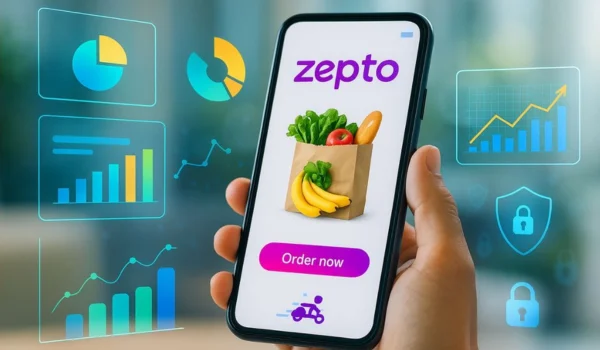
Zepto is a quick-commerce grocery delivery startup founded in 2021 by Aadit Palicha and Kaivalya Vohra. Both founders were teenagers when they started the company, and their idea was simple: deliver daily essentials to customers within 10 minutes.
The company operates in several Indian cities such as Mumbai, Delhi, Bengaluru, Hyderabad, and Chennai.
Zepto mainly delivers:
- Fruits and vegetables
- Dairy products
- Packaged groceries
- Snacks and beverages
- Personal care items
- Household essentials
Customers order through the Zepto mobile app, and the company promises delivery within 10–15 minutes.
Understanding the Zepto Business Model
Zepto follows a Quick Commerce (Q-Commerce) business model, which is an advanced version of traditional e-commerce.
Unlike normal grocery delivery companies that deliver in a few hours or the next day, Zepto focuses on ultra-fast delivery using a network of dark stores.
Key Components of Zepto’s Business Model
- Dark Stores
- Hyperlocal Delivery
- Technology Optimization
- Inventory Control
- Fast Logistics
Let’s understand each part.
- Dark Store Model
The core of Zepto’s business strategy is its dark store network.
Dark stores are small warehouses located within residential areas. These stores are not open to the public. They are used only to store products and fulfill online orders quickly.
For example:
- If a customer in Delhi places an order,
- The order is assigned to the nearest dark store,
- A delivery partner picks the items and delivers them within minutes.
This system helps Zepto achieve its famous 10-minute delivery promise.
- Hyperlocal Delivery System
Zepto operates using a hyperlocal delivery model.
This means deliveries are handled within a very small radius (1.5–3 km) from the dark store.
Benefits of this approach include:
- Faster deliveries
- Lower logistics cost
- Efficient route planning
- Higher order completion rates
Because of hyperlocal delivery, Zepto can manage thousands of orders every day in each city.
- Smart Technology and Data
Technology plays a major role in Zepto’s success.
The company uses advanced algorithms and real-time data to manage:
- Inventory
- Delivery routes
- Customer demand
- Order prioritization
For example:
If many people in a particular area frequently order milk, bread, and eggs, the system ensures these products are always available in nearby dark stores.
This reduces delivery time and improves customer satisfaction.
- Limited but High-Demand Product Range
Unlike supermarkets that stock thousands of items, Zepto focuses on high-demand essential products.
A typical Zepto dark store may stock 2,500–3,000 products, which is much smaller than a supermarket but carefully selected based on demand.
This helps the company:
- Manage inventory better
- Reduce wastage
- Speed up order picking
- Improve profitability
How Does Zepto Make Money?
Like most quick-commerce companies, Zepto has multiple revenue streams. Let’s explore the main ways Zepto generates income.
- Product Margin
The biggest source of income for Zepto is product margin.
Zepto buys products from:
- FMCG brands
- wholesalers
- distributors
Then it sells them to customers at a slightly higher price.
For example:
- A product purchased for ₹90
- Sold to customers for ₹100–₹110
The difference becomes Zepto’s gross margin.
- Delivery Charges
Zepto also earns money through delivery fees.
Depending on the order value and city, customers may pay:
- ₹10 – ₹40 delivery charge
Some orders qualify for free delivery if they cross a minimum order amount.
Even though delivery charges are small, they contribute significantly when the platform handles thousands of orders daily.
- Convenience Fees
In many cases, Zepto also charges a platform or convenience fee.
This small fee helps the company cover operational costs such as:
- order processing
- technology infrastructure
- logistics management
- Brand Promotions & Advertising
Another major revenue source is brand partnerships.
Large FMCG brands pay Zepto to:
- Promote products on the app homepage
- Show sponsored product listings
- Run promotional campaigns
For example, brands selling snacks, beverages, or personal care products may pay extra to appear at the top of search results.
This is similar to how advertising works on large platforms like Amazon or Flipkart.
- Private Label Products
Like many e-commerce companies, Zepto has started introducing private label products.
Private labels mean products manufactured for Zepto under its own brand name.
These products usually offer higher profit margins because Zepto controls:
- manufacturing
- branding
- pricing
Private labels are a powerful long-term revenue strategy.
- Subscription Programs
Zepto also experiments with membership or subscription services.
Subscribers may receive benefits like:
- Free delivery
- Exclusive discounts
- Faster delivery slots
This helps the company generate recurring revenue while increasing customer loyalty.
Cost Structure of Zepto
Running a quick-commerce company is expensive. Zepto has several major costs.
- Dark Store Rent
Operating hundreds of warehouses in cities like Delhi or Mumbai requires significant rent.
- Delivery Partner Payments
Delivery executives are paid per order and through incentives.
- Inventory Cost
The company needs to stock thousands of products in each dark store.
- Technology Infrastructure
Maintaining mobile apps, AI systems, and backend logistics platforms requires continuous investment.
- Marketing and Customer Acquisition
Startups like Zepto spend heavily on:
- discounts
- coupons
- advertising campaigns
Challenges in Zepto’s Business Model
Even though Zepto is growing rapidly, the business model has some challenges.
High Operational Costs
Maintaining ultra-fast delivery requires heavy spending on logistics and infrastructure.
Intense Competition
Zepto competes with major players like:
- Blinkit
- Swiggy Instamart
- BigBasket
These companies are also investing heavily in quick-commerce.
Profitability Pressure
Many quick-commerce companies struggle to achieve consistent profits because of delivery costs and discounts.
Why Zepto Became So Popular
Despite challenges, Zepto has grown quickly because of several factors:
- Ultra-fast delivery
Customers love getting groceries within minutes. - Convenience
No need to visit crowded markets or supermarkets. - Urban lifestyle fit
Busy professionals prefer quick online ordering. - Smart logistics network
Dark stores enable efficient operations.
Future of Zepto
The quick-commerce industry in India is expected to grow rapidly over the next decade.
Zepto plans to expand by:
- Opening more dark stores
- Launching private label products
- Improving logistics efficiency
- Expanding to more Indian cities
If the company manages costs effectively, it could become one of the largest quick-commerce platforms in India.
Final Thoughts
The business model of Zepto is a great example of how technology, logistics, and customer convenience can transform traditional grocery shopping.
By combining dark stores, hyperlocal delivery, and data-driven inventory management, Zepto has built a system capable of delivering groceries in minutes. The company earns money through product margins, delivery fees, advertising, subscriptions, and private label products.
While the quick-commerce industry still faces profitability challenges, Zepto has proven that speed and convenience are powerful business drivers in modern urban India.
For entrepreneurs and business enthusiasts, Zepto’s journey shows that innovative thinking and strong execution can create massive opportunities even in a traditional sector like grocery retail.