
In India’s crowded food delivery market, very few brands have managed to turn a single product category into a premium, scalable, and profitable business. Behrouz Biryani is one such brand. While biryani itself is not new to India, Behrouz transformed it into a luxury dining-at-home experience, powered by technology, branding, and operational efficiency.
As a business expert closely observing India’s food-tech and QSR ecosystem, I find Behrouz Biryani fascinating because it proves that even a traditional Indian dish can be premiumized and scaled nationally—without dine-in restaurants.
Let’s break down Behrouz Biryani’s business model and clearly understand how it makes money.
What Is Behrouz Biryani?
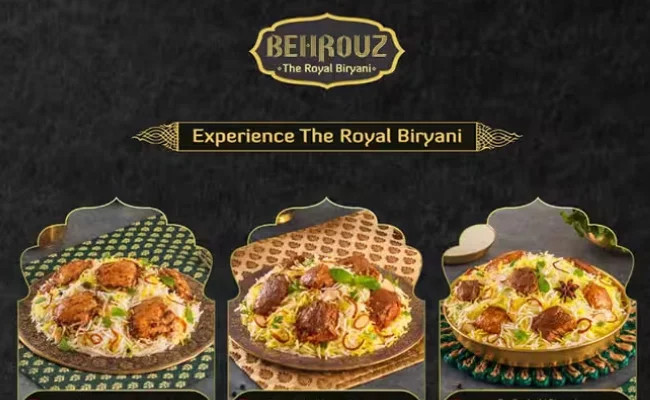
Behrouz Biryani is a delivery-only (cloud kitchen) biryani brand operated by Rebel Foods (formerly Faasos). The brand positions itself as a royal, Persian-inspired biryani experience, focusing on rich flavours, premium ingredients, and storytelling.
Behrouz does not operate physical dine-in restaurants. Instead, it runs from cloud kitchens, serving customers exclusively through food delivery platforms and its own ordering channels.
Core Idea Behind Behrouz Biryani’s Business Model
The success of Behrouz rests on three core ideas:
- Premiumization of a mass food category
- Asset-light cloud kitchen operations
- High repeat orders through brand loyalty
Behrouz doesn’t compete on price. It competes on experience, packaging, and consistency, allowing it to maintain higher margins than local biryani outlets.
How Does Behrouz Biryani Make Money? (Clear Revenue Streams)
- Direct-to-Consumer Food Sales (Primary Revenue)
The biggest source of revenue for Behrouz Biryani is direct food sales through delivery.
Customers order:
- Signature biryanis
- Combo meals
- Desserts and beverages
The average order value (AOV) for Behrouz is significantly higher than regular biryani brands because:
- Portion sizes are premium
- Packaging is luxurious
- Pricing is positioned as “royal dining”
👉 Food sales account for over 80% of total revenue.
- Multi-Brand Cloud Kitchen Utilization
Behrouz operates inside Rebel Foods’ shared cloud kitchens.
How this boosts profitability:
- Same kitchen infrastructure serves multiple brands
- Fixed costs (rent, staff, utilities) are shared
- Higher kitchen utilization reduces per-order cost
This model allows Behrouz to generate more revenue without increasing overheads proportionally.
- Upselling & Add-On Products
Behrouz doesn’t just sell biryani—it sells experiences and add-ons.
Common add-ons include:
- Kebabs
- Gravies
- Desserts
- Beverages
These items have high margins and significantly increase order value.
👉 Add-ons play a big role in improving overall profitability per order.
- Packaging as a Profit Enabler
Behrouz’s premium packaging is not just branding—it’s a business strategy.
- Better heat retention
- Luxury unboxing experience
- Reduced spillage and complaints
Satisfied customers reorder more frequently, increasing lifetime customer value (LTV).
- Online Platform Sales & Data Advantage
Behrouz sells primarily through:
- Zomato
- Swiggy
- Rebel Foods’ own platforms
While platforms charge commissions, they also provide:
- Massive customer reach
- Demand analytics
- Real-time pricing insights
Behrouz uses this data to:
- Optimize menu pricing
- Improve demand forecasting
- Reduce food wastage
- Brand-Led Premium Pricing
Behrouz has successfully positioned itself as a luxury biryani brand.
This allows it to:
- Charge 20–30% higher prices than local competitors
- Maintain better gross margins
- Avoid price wars
Premium branding is a direct profit driver.
Cost Structure of Behrouz Biryani
Understanding how Behrouz controls costs is key to understanding how it makes money.
Major costs include:
- Raw ingredients (meat, rice, spices)
- Kitchen staff salaries
- Delivery platform commissions
- Packaging
- Marketing and branding
However, cloud kitchens eliminate:
- Front-end staff costs
- Dining space rentals
- High interior expenses
This keeps operating margins healthy despite commissions.
Marketing Strategy: Storytelling Over Discounts
Behrouz relies heavily on:
- Storytelling (royal Persian heritage)
- Visual branding
- Limited-time menu launches
Rather than deep discounts, Behrouz focuses on:
- Brand recall
- Emotional connection
- Festive positioning
This reduces dependency on heavy discounting, protecting margins.
Target Customer Segment
Behrouz targets:
- Urban millennials
- Young professionals
- Families ordering premium meals
- Celebration-based orders
These customers value:
- Taste consistency
- Brand image
- Convenience over price
Why Behrouz’s Business Model Works in India
From a business perspective, Behrouz benefits from:
- India’s love for biryani
- Rising food delivery adoption
- Willingness to pay for premium convenience
- Growing cloud kitchen infrastructure
It combines Indian taste with modern business efficiency.
Scalability & Expansion Strategy
Behrouz can scale rapidly because:
- No dine-in dependency
- Shared kitchens across cities
- Centralized branding and procurement
Launching in a new city requires:
- Kitchen onboarding
- Staff training
- Platform listing
This allows national expansion at speed.
Challenges in Behrouz Biryani’s Business Model
Despite its success, challenges exist:
- High delivery platform commissions
- Intense competition
- Maintaining consistency across cities
- Rising ingredient costs
However, strong brand equity helps Behrouz manage these risks.
Final Thoughts
Behrouz Biryani is a case study in premium food-brand execution. It makes money by combining high-value branding, cloud kitchen efficiency, data-driven operations, and repeat customer loyalty.
From an Indian business expert’s point of view, Behrouz proves that you don’t need hundreds of restaurants to build a national food brand—you need a smart model and a strong story.
For entrepreneurs, Behrouz offers a clear lesson:
Traditional food + modern branding + cloud kitchens = scalable profits.