
The hospitality industry has changed dramatically in the last decade, thanks to technology-driven startups. One company that completely transformed the budget hotel segment in India is OYO.
What started as a small startup has now become one of the largest hotel chains in the world, operating in multiple countries. OYO made affordable accommodation more accessible while helping small hotel owners improve their business.
But have you ever wondered how OYO actually works and how it earns money?
In this article, we will explore the OYO business model, how the company operates, and the different ways it generates revenue.
What is OYO?
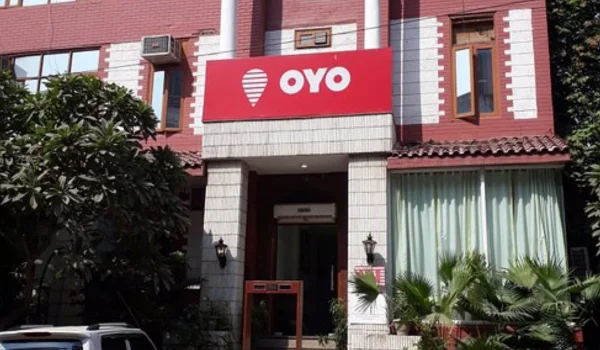
OYO (short for On Your Own) is a hospitality platform that partners with hotels, guesthouses, and property owners to provide standardized and affordable accommodation.
The company was founded in 2013 by Ritesh Agarwal, a young entrepreneur from India who wanted to solve the problem of unreliable budget hotels.
Before OYO entered the market, budget travelers often faced issues such as:
- Poor room quality
- Lack of cleanliness
- Unreliable pricing
- Limited online booking options
OYO addressed these problems by partnering with small hotels and upgrading them with standardized services.
Today, travelers can easily book OYO rooms through the OYO mobile app or website.
The Problem OYO Solved
In India, thousands of small hotels and guesthouses existed but most of them lacked:
- proper branding
- online presence
- professional management
On the other hand, customers struggled to find clean and affordable rooms with reliable service.
OYO solved this problem by creating a technology-driven hospitality platform that connects travelers with budget hotels.
The company standardized services such as:
- clean rooms
- Wi-Fi
- air conditioning
- fresh linens
- customer support
This made budget accommodation more predictable and trustworthy.
Understanding the OYO Business Model
The business model of OYO is based on a platform and partnership approach.
Instead of owning most hotels, OYO partners with property owners and helps them improve their operations.
The company provides:
- brand recognition
- booking technology
- operational support
- marketing services
In return, OYO earns a share of the revenue generated from hotel bookings.
Types of OYO Business Models
Over time, OYO has experimented with different operating models.
- Aggregator Model
The aggregator model was OYO’s original business strategy.
In this model, OYO partners with existing hotels and lists them on its platform.
OYO helps the hotel improve services by providing:
- branding
- technology tools
- online booking support
- operational guidelines
Customers can then book these hotels through the OYO app.
In return, OYO earns a commission from each booking.
- Franchise Model
In the franchise model, hotel owners operate their property under the OYO brand name.
OYO provides:
- brand recognition
- marketing support
- operational training
- booking technology
The hotel owner manages daily operations while OYO earns royalty or revenue share.
This model helps OYO expand rapidly without investing heavily in property ownership.
- Lease Model
In some cases, OYO follows a lease model.
Here, the company leases a hotel property from the owner and takes full control of operations.
OYO then manages:
- staffing
- pricing
- marketing
- customer experience
The company earns revenue from room bookings while paying rent to the property owner.
How Does OYO Make Money?
OYO has developed multiple revenue streams. Let’s explore the main ways the company generates income.
- Commission from Hotel Bookings
One of the biggest sources of revenue for OYO is commission from hotel bookings.
Whenever a customer books a room through the OYO app or website, the hotel pays OYO a percentage of the booking value.
The commission usually ranges between 15% and 25%, depending on the partnership agreement.
For example:
Room price: ₹2000 per night
OYO commission (20%): ₹400
This means OYO earns ₹400 from that booking.
- Franchise Fees
Hotels that operate under the OYO brand often pay franchise or royalty fees.
In return, they receive:
- brand visibility
- online bookings
- marketing campaigns
- operational support
For small hotels, partnering with OYO can significantly increase occupancy rates.
- Lease Revenue
In the lease model, OYO takes control of the property and earns money directly from room bookings.
If the hotel performs well, the company can generate higher profit margins compared to the aggregator model.
However, this model also involves higher operational risks.
- Value-Added Services
OYO also earns revenue from additional services offered to hotel partners.
These services include:
- property management tools
- staff training
- interior upgrades
- technology solutions
Hotel owners often pay extra for these services.
- Dynamic Pricing Strategy
OYO uses data analytics and dynamic pricing algorithms to optimize room rates.
Prices can change depending on:
- demand
- season
- location
- special events
This strategy helps maximize bookings and revenue.
Advantages of OYO’s Business Model
The OYO business model has several strengths.
Asset-Light Expansion
Since OYO does not own most properties, it can expand quickly without huge investments in real estate.
Strong Brand Recognition
The OYO brand has become widely recognized in the budget hospitality sector.
Technology-Driven Operations
OYO uses technology to manage:
- bookings
- pricing
- customer reviews
- hotel operations
This improves efficiency and customer experience.
Large Hotel Network
By partnering with thousands of hotels, OYO offers travelers a wide variety of accommodation options.
Challenges in the OYO Business Model
Despite its rapid growth, OYO has faced several challenges.
Quality Control
Maintaining consistent service quality across thousands of partner hotels can be difficult.
Partner Conflicts
Some hotel owners have raised concerns about revenue sharing and operational policies.
Intense Competition
OYO competes with global hospitality platforms such as Airbnb and Booking.com.
These companies also offer online accommodation booking services.
Future of OYO
The future of OYO depends on improving its partner relationships and operational efficiency.
The company is focusing on:
- strengthening its franchise model
- improving hotel quality standards
- expanding into new markets
- enhancing customer experience
With the recovery of the travel industry after the pandemic, demand for affordable accommodation is expected to grow.
This creates new opportunities for companies like OYO.
Final Thoughts
The business model of OYO is a fascinating example of how technology can disrupt a traditional industry like hospitality.
Instead of building hotels, the company created a platform that connects travelers with existing properties while standardizing services.
OYO makes money through commissions, franchise fees, lease operations, and value-added services.
For entrepreneurs, OYO’s journey offers an important lesson: identifying inefficiencies in traditional industries and solving them with technology can create massive business opportunities.