
An E-Stamp (Electronic Stamp Paper) is a secure and legally valid method of paying stamp duty in India. It replaces traditional stamp papers in many states and is used for agreements, property transactions, affidavits, lease deeds, gift deeds, loan agreements, and other legal documents.
This guide explains how to get an E-Stamp online, the required documents, fees, and the verification process.
Disclaimer: Stamp duty rules and e-stamping facilities vary by state. Always check the official website of your State Government or the authorized agency before applying.
What Is an E-Stamp?
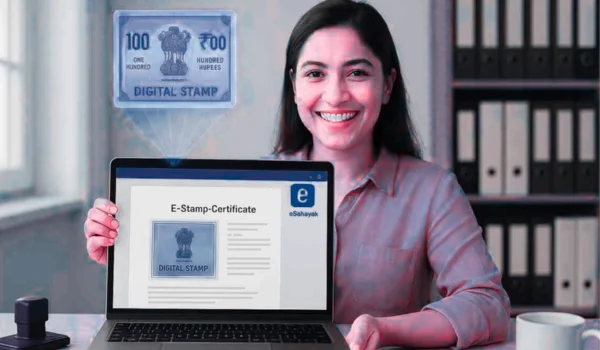
An E-Stamp is an electronically generated stamp certificate issued after payment of stamp duty. It contains a Unique Identification Number (UIN) that helps verify its authenticity and reduces the risk of counterfeit stamp papers.
In many states, e-stamping is managed through the Stock Holding Corporation of India Limited (SHCIL) or the respective State Government’s authorized portal.
Why Is an E-Stamp Required?
An E-Stamp is commonly used for:
- Property Sale Deeds
- Gift Deeds
- Rental or Lease Agreements
- Affidavits
- Power of Attorney
- Loan Agreements
- Partnership Deeds
- Business Contracts
- Mortgage Deeds
Documents Required
Depending on the transaction, you may need:
- Aadhaar Card
- PAN Card
- Identity proof
- Address proof
- Details of the parties involved
- Property details (for property transactions)
- Draft document (where required)
The required documents may vary by state and the nature of the document.
How to Get an E-Stamp Online
Step 1: Visit the Official E-Stamp Portal
Visit the official e-stamping portal of your state or the authorized agency, such as SHCIL, if applicable.
Step 2: Select the State
Choose the state where the document will be executed or where stamp duty is payable.
Different states have different stamp duty rates and procedures.
Step 3: Enter Transaction Details
Provide the required information, including:
- Type of document
- First party and second party details
- Property details (if applicable)
- Stamp duty amount
- Purpose of the transaction
Check all details carefully before proceeding.
Step 4: Pay the Stamp Duty
Make the payment using the available methods, such as:
- UPI
- Net Banking
- Debit Card
- Credit Card
- Other approved payment methods
The applicable stamp duty depends on your state and the type of document.
Step 5: Download the E-Stamp Certificate
After successful payment, download the E-Stamp Certificate in PDF format.
The certificate generally contains:
- Unique Identification Number (UIN)
- Certificate Number
- Stamp Duty Amount
- Date of Issue
- State Name
- Transaction Details
Keep a copy for future reference.
How to Verify an E-Stamp
You can verify the authenticity of an E-Stamp by entering its:
- Certificate Number
- Unique Identification Number (UIN)
on the official verification portal provided by the authorized agency or the concerned state.
Benefits of E-Stamping
- Legally valid
- Secure and tamper-resistant
- Instant generation
- Easy online verification
- Reduces the risk of fake stamp papers
- Accepted by government departments and courts, subject to applicable laws
Processing Time
In most cases, the E-Stamp Certificate is generated immediately after successful payment. However, processing may vary depending on the state’s system and payment confirmation.
Common Mistakes to Avoid
- Selecting the wrong state
- Paying incorrect stamp duty
- Entering incorrect party details
- Downloading from unofficial websites
- Not verifying the certificate after issuance
FAQs
Is an E-Stamp legally valid?
Yes. An E-Stamp issued by the authorized agency is legally valid and can be used for documents that require stamp duty, subject to the applicable state laws.
Can I get an E-Stamp online in every state?
Many states offer online e-stamping services, while others may have partially online or offline processes. Availability depends on the state’s registration system.
How long is an E-Stamp valid?
An E-Stamp generally does not have an expiry date. However, it should be used for the transaction for which it was purchased, and state-specific rules may apply.
Can I verify an E-Stamp online?
Yes. Most authorized e-stamping systems provide an online verification facility using the certificate number or Unique Identification Number (UIN).
Conclusion
An E-Stamp is a convenient and secure way to pay stamp duty for legal and property-related documents in India. The online process is simple—select the appropriate state, enter the transaction details, pay the applicable stamp duty, and download the E-Stamp Certificate. Before purchasing, always verify the latest stamp duty rates and procedures applicable in your state to ensure your document is legally compliant.