
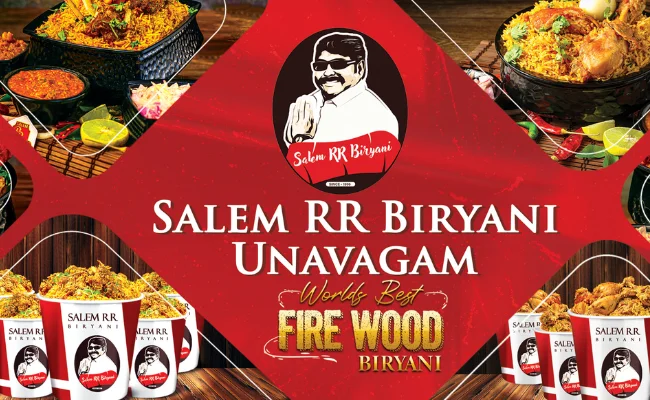
Salem RR Biryani is a popular regional biryani restaurant brand known for its traditional South Indian biryani flavours and loyal customer base, especially in Tamil Nadu and Chennai. As the branded biryani market grows across India, Salem RR offers franchise opportunities for entrepreneurs interested in the quick-serve restaurant (QSR) and dine-in business. This article covers everything you need to know about the Salem RR Biryani franchise cost, franchise fee & royalty, profit margin & ROI, space & manpower needs, franchisor support, pros & cons, eligibility, application process, risks, FAQs, and conclusion.
🍛Why Franchise with Salem RR Biryani?
Salem RR Biryani has built strong regional recognition over more than two decades, offering popular biryani and South Indian cuisine that appeals to daily diners and biryani lovers alike. Becoming a franchise partner lets you leverage this brand recall while tapping into India’s large demand for affordable and tasty casual dining options.
💰 Investment Cost (INR)
The investment to start a Salem RR Biryani franchise varies based on outlet format, location, and size. Reported or commonly cited estimates include:
| Format / Outlet Type | Estimated Investment (₹) | Details |
| Small / Delivery-Focused Outlet | ₹25 – ₹50 Lakh | Compact space, delivery/takeaway focus |
| Standard Dine-In Outlet | ₹50 – ₹85 Lakh | Moderate size with seating |
| Full Scale / Premium Locations | ₹85 Lakh – ₹1 Crore+ | Includes fit-out, rental deposit & central kitchen costs |
What the Investment Covers
✔ Fit-out cost at ~₹2,000 per sq.ft (approx.)
✔ Franchise fee & licence fees (5-year validity)
✔ Central kitchen setup fee (one-time non-refundable)
✔ Rent / refundable deposit (varies city to city)
💡 Note: Rent and deposit costs are significant and vary widely — urban sites cost more than Tier-2 locations.
💼 Franchise Fee & Royalty
Franchise Fee
Salem RR Biryani charges a franchise licence fee for a fixed term (typically 5 years). This unlocks the brand use and support system.
Royalty & Marketing Fees
The brand does not publicly disclose a standard royalty percentage online, but food QSR models in India commonly charge ~4 % – 8 % of gross sales plus a marketing contribution. Exact terms are disclosed in the official franchise pack and agreement.
👉 Always confirm royalty structure directly with Salem RR Biryani before signing.
📈 Profit Margin & ROI
Profitability depends on location, footfall, rent level, cost control, and delivery/online presence. Realistic expectations in the biryani/QSR segment include:
| Metric | Typical Estimate |
| Gross Margin (food) | ~60 % – 70 %* before operating costs* |
| Net Margin | ~10 % – 18 %* after rent & wages* |
| Break-Even Period | ~2 – 4 years (varies by outlet performance) |
These are indicative values based on industry standards — actual results depend on how well costs and operations are managed.
🏢 Space & Manpower Needs
Space Requirements
| Outlet Type | Approx. Space |
| Compact / Delivery-Focused | ~500 – 800 sq.ft. |
| Standard Dine-In | ~800 – 1,500 sq.ft. |
| Larger / Premium | 1,500 sq.ft. + |
Best locations are shopping areas, high streets, commercial clusters, malls, and college zones.
Manpower Requirements
Typical staffing for a dine-in outlet:
- Kitchen staff: 3 – 6 persons
- Service staff: 3 – 5 persons
- Manager / Supervisor: 1 – 2 persons
Delivery-centric or cloud kitchen formats require fewer staff but need efficient platform integration.
🤝 Franchisor Support
Salem RR Biryani provides structured support for franchise partners:
✔ Site analysis and location selection assistance
✔ Brand guidelines and operation protocols
✔ Menu standardisation and central kitchen linkage
✔ Training for staff and supervisors
✔ Grand launch & soft opening coordination
This support helps reduce early mistakes and aligns the franchisee with the brand’s quality and service standards.
👍 Pros & 👎 Cons
✅ Pros
✔ Strong regional brand with loyal customers especially in Tamil Nadu and Chennai.
✔ FOCO model helps owners earn without managing day-to-day operations directly.
✔ Structured franchisor support and menu know-how.
✔ Growing demand for biryani and Indian QSR formats.
❌ Cons
❗ High initial investment — fit-out and rental deposits can be significant.
❗ Operational profitability sensitive to rent and staff costs.
❗ Competition from other biryani brands and local eateries.
📋 Eligibility Criteria
To qualify for a Salem RR Biryani franchise, you typically need:
✔ Investment capacity: ₹25 L – ₹1 Cr+ (varies by outlet size).
✔ Access to commercial space or ability to secure long-term lease.
✔ Commitment to follow brand systems and quality standards.
✔ Basic managerial skills or willingness to partner with operations team.
✔ Legal compliance: GST, FSSAI, trade licences, and local permissions
✍️ Application Process
The typical process involves:
- Franchise enquiry submission: Fill out the official form on Salem RR Biryani’s website and express interest.
- Initial screening: Review of your business profile and investment capacity.
- Meetings & verification: Franchise discussions and formal verification.
- Agreement signing: Franchise agreement and payment of licence fees.
- Site planning & lease: Location selection, lease negotiation, and setup planning.
- Pre-opening and launch: Pre-opening support and grand launch coordination.
⚠️ Risks to Consider
✔ Location risk: Low footfall areas reduce sales potential.
✔ High rent or lease costs can strain margins.
✔ Operational complexity: Managing inventory, quality, and staffing
✔ Market competition: Local biryani joints and other branded restaurants
❓ FAQs (Frequently Asked Questions)
Q1. How much does a Salem RR Biryani franchise cost in India?
A: Around ₹25 Lakh to ₹1 Crore+ depending on outlet size, location, and format.
Q2. Is there a franchise fee?
A: Yes — a licence fee valid for about 5 years is part of the cost.
Q3. Does Salem RR charge royalty?
A: The brand does not publicly list standard royalty — expect typical QSR range 4 % – 8 % of sales plus marketing contribution subject to final agreement.
Q4. What space is ideal?
A: Around 500 sq.ft. to 1,500 sq.ft. depending on dine-in or delivery focus.
Q5. How long to break even?
A: Conservative plans assume 2 – 4 years in strong locations.
🏁 Conclusion
A Salem RR Biryani franchise in India offers a chance to partner with a regional favourite in the biryani and casual dining segment. With structured support and brand recognition, it can be a strong business option for investors with appropriate capital and location insights. However, careful assessment of rent, staff costs, and operational plans is essential for long-term success. Always confirm exact numbers and terms directly with the franchisor before investing.
 Akshay Kumar