
In the last few years, the food industry has changed dramatically. Earlier, restaurants mainly depended on dine-in customers, but today a large number of people prefer ordering food online through delivery apps. This shift has created a new type of food business known as the cloud kitchen.
A cloud kitchen is one of the most interesting and fast-growing business models in the food industry. Many entrepreneurs and startups are choosing this model because it requires lower investment and fewer operational costs compared to traditional restaurants.
In this article, we will understand what a cloud kitchen business model is, how it works, and how cloud kitchens make money.
What is a Cloud Kitchen?
A cloud kitchen, also known as a ghost kitchen or virtual kitchen, is a food business that prepares meals only for online delivery. These kitchens do not have dine-in facilities or customer seating areas.
Customers place orders through food delivery platforms such as Zomato or Swiggy, and the food is prepared in the kitchen and delivered to their homes.
Because there is no need for a dining space, cloud kitchens can operate from smaller locations with lower rent and fewer staff members.
Why Cloud Kitchens Are Becoming Popular
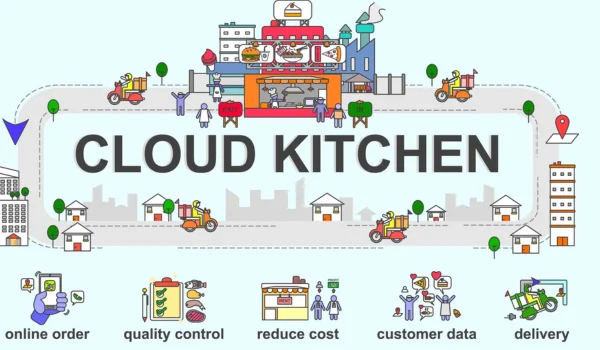
Cloud kitchens have become extremely popular due to changing consumer behavior.
Here are some major reasons for their rapid growth.
- Growth of Food Delivery Apps
The popularity of apps like Zomato and Swiggy has made food delivery easy and convenient.
Today, people can order their favorite dishes within minutes without leaving their homes.
- Lower Startup Cost
Opening a traditional restaurant in cities like Delhi, Mumbai, or Bengaluru requires a huge investment.
However, a cloud kitchen can start with much lower costs because it does not require:
- expensive interiors
- dining furniture
- large staff
- High Demand for Online Food
Busy lifestyles, long working hours, and increasing smartphone usage have increased demand for home-delivered food.
Cloud kitchens perfectly fit this modern lifestyle.
Types of Cloud Kitchen Business Models
Cloud kitchens can operate in several different ways depending on their strategy.
- Single Brand Cloud Kitchen
In this model, the kitchen prepares food for only one brand or cuisine.
For example, a cloud kitchen may specialize only in:
- pizza
- biryani
- burgers
- Chinese food
This model helps maintain strong brand identity and consistent quality.
- Multi-Brand Cloud Kitchen
In this model, one kitchen operates multiple food brands.
For example, a single kitchen may run:
- a biryani brand
- a burger brand
- a dessert brand
Even though the food comes from the same kitchen, customers see them as different restaurants on delivery apps.
This model increases revenue opportunities.
- Aggregator-Owned Cloud Kitchens
Some food delivery companies operate their own cloud kitchen spaces.
For example, companies like Zomato and Swiggy have experimented with providing kitchen infrastructure to restaurant brands.
Restaurants can rent these spaces and focus only on cooking and order fulfillment.
- Shared Kitchen Model
In this model, multiple food brands share the same kitchen infrastructure.
This helps entrepreneurs reduce costs by sharing:
- rent
- utilities
- kitchen equipment
It is a popular option for small food startups.
How Cloud Kitchens Work
The working process of a cloud kitchen is quite simple.
- A customer opens a food delivery app.
- They browse restaurants listed on the platform.
- The customer places an order.
- The cloud kitchen receives the order digitally.
- The kitchen prepares the food.
- A delivery partner picks up the order and delivers it.
Delivery partners are usually managed by platforms like Zomato or Swiggy.
How Cloud Kitchens Make Money
Cloud kitchens have several revenue streams.
Let’s explore the main ways they generate income.
- Online Food Orders
The primary source of revenue is online food orders.
Customers order food through delivery platforms, and the cloud kitchen earns money from each order.
For example:
If a burger meal costs ₹250 and receives 100 orders in a day, the daily revenue would be ₹25,000.
However, delivery platforms usually charge a commission of around 20–30%.
Even after commission, cloud kitchens can remain profitable due to lower operational costs.
- Multiple Virtual Brands
Many cloud kitchens run multiple food brands from one kitchen.
For example:
One kitchen may sell:
- biryani
- pizza
- momos
- desserts
This allows the business to target different customer preferences and increase sales.
- Direct Online Orders
Some cloud kitchens also accept direct orders through their own website or mobile app.
This helps them avoid high commissions charged by delivery platforms.
Direct orders also help build customer loyalty and brand recognition.
- Catering and Bulk Orders
Cloud kitchens can also earn money through corporate catering and bulk food orders.
Companies often order food for:
- office meetings
- team lunches
- corporate events
These large orders can generate significant revenue.
- Brand Partnerships
Cloud kitchens sometimes collaborate with:
- food influencers
- celebrity chefs
- popular restaurant brands
These partnerships help attract more customers and increase sales.
Advantages of the Cloud Kitchen Business Model
The cloud kitchen model offers several benefits.
Low Investment
Compared to traditional restaurants, the startup cost is much lower.
Entrepreneurs can start with limited capital and scale gradually.
Lower Operating Costs
Cloud kitchens save money on:
- rent
- interior design
- waitstaff salaries
This improves profit margins.
Faster Expansion
Since cloud kitchens require less space, businesses can quickly open new kitchens in different locations.
Data-Driven Decisions
Food delivery platforms provide valuable data such as:
- popular dishes
- peak ordering times
- customer preferences
This data helps businesses improve their menu and marketing strategy.
Challenges in the Cloud Kitchen Business
Despite its advantages, the cloud kitchen model also has some challenges.
High Competition
The food delivery market is highly competitive. Many brands compete for visibility on delivery apps.
Platform Dependency
Cloud kitchens depend heavily on platforms like Zomato and Swiggy for orders.
High commission fees can reduce profit margins.
Quality and Delivery Issues
Since customers cannot see the kitchen physically, maintaining food quality and packaging is very important.
Poor reviews can quickly damage a brand’s reputation.
Future of Cloud Kitchens in India
The cloud kitchen industry in India is expected to grow rapidly in the coming years.
Factors driving this growth include:
- increasing smartphone usage
- growth of food delivery apps
- busy urban lifestyles
- demand for convenience
Cities like Delhi, Mumbai, and Bengaluru are already seeing a boom in cloud kitchen startups.
Many experts believe that cloud kitchens could become a major part of the future food industry.
Final Thoughts
The cloud kitchen business model is revolutionizing the food industry by focusing entirely on online food delivery.
By eliminating the need for dine-in spaces and reducing operational costs, cloud kitchens allow entrepreneurs to start food businesses with lower investment and higher flexibility.
Cloud kitchens make money mainly through online food orders, multiple virtual brands, direct customer orders, catering services, and brand collaborations.
For aspiring entrepreneurs in India, cloud kitchens offer an exciting opportunity to enter the food business in a modern, scalable, and technology-driven way.