
Unlike many retail brands in India, Zara does not provide traditional franchise opportunities to individual investors or small business owners. All Zara stores in India are company-owned or operated under a joint venture model through Inditex (the Spanish parent company) and Trent Limited (a Tata Group retail company). This structure helps Zara maintain consistent brand quality and customer experience across all locations.
This means you cannot directly buy or open a Zara franchise unit in India like you can with many other brands. However, for educational purposes, this article explains what typical investment and financials might look like if such a franchise model were available, based on industry estimates and Zara’s known store economics.
Estimated Investment
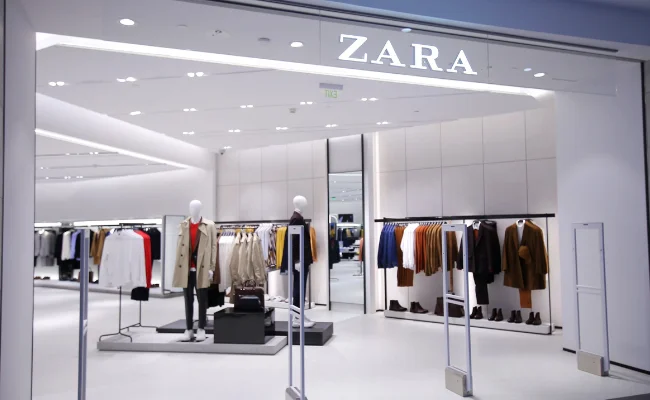
Below is an industry-based approximation of what it would cost to open a Zara store franchise in India — noting that this is hypothetical and illustrative only:
| Cost Component | Estimated Amount (₹) |
| Franchise Fee (One-Time Estimate) | ₹22 – 30 lakh |
| Store Setup & Interiors | ₹1.5 – 2.5 crore |
| Initial Inventory | ₹50 lakh – ₹1 crore |
| Marketing & Launch Costs | ₹10 – 20 lakh |
| Working Capital | ₹50 lakh – ₹1 crore (estimate) |
| Total Hypothetical Investment | ₹2.5 – ₹5+ crore (varies by city/store size) |
💡 This is not a formal franchise offer from Zara India — it’s a realistic estimate of the type of investment involved in launching a Zara-style global fashion retail store in India, based on similar retail models.
Franchise Fee & Royalty (Hypothetical)
Franchise Fee
If Zara were to offer franchises, sources suggest a one-time franchise fee in the range of ₹22 – 30 lakh could apply to grant rights to use the brand name and systems.
Royalty Fees
In international markets where Inditex does allow franchises, typical royalty fees range between 5 % – 10 % of monthly sales plus an advertising contribution (~3 % of sales) to support global marketing and retail operations.
🔹 Important Note: These numbers are illustrative based on global franchise structures; Zara’s real model in India does not follow this format.
Profit Margin & ROI (Illustrative)
Estimated Revenue and Profit
| Business Metric | Typical Estimates |
| Average Monthly Sales (Large Mall/High Street) | ₹50 lakh – ₹1.5 crore |
| Net Profit Margin | ~10 % – 18 % (post expenses) |
| Break-Even / ROI Period | ~2 – 3 years (with strong sales) |
Fashion retail margins are typically tighter than food or services. A well-located Zara store (or similar premium fashion store) in a busy mall can generate significant revenue but also incurs high operating costs like rent and salaries.
📌 These figures are estimates and will vary by location, city tier and operational efficiency.
Space & Manpower Needs
Space Requirements
To open a Zara fashion store in India:
- Required Space: ~2,000 – 4,000 sq.ft of retail space in high-traffic areas (malls or premium high streets).
- Retail space cost is a key variable and may run ₹10 – ₹20 lakh/month or more in prime locations.
The store layout must reflect Zara’s global brand aesthetics — minimalistic, high ceilings, clear sight lines and premium fixtures.
Manpower Needs
Typical team for a fashion retail store includes:
- Store Manager
- Assistant Managers / Supervisors
- Sales Associates
- Inventory & Visual Merchandising Staff
- Billing & Customer Support Staff
A team of 10–25 employees is common, depending on store size and hours of operation.
Franchisor Support (If Franchise Was Available)
In markets where Zara does offer franchise models, support typically includes:
✔ Training on brand standards and customer service
✔ Visual merchandising guidelines
✔ Regular inventory and supply chain support
✔ Marketing and promotional strategy alignment
✔ Operations and quality control systems
However, in India Zara does not offer franchise support packages, since stores are operated under a joint venture with strategic partners rather than independent franchise holders.
Pros & Cons (Considering Hypothetical Franchise Model)
Pros
✔ Strong Global Brand Recognition — Zara is one of the top fashion brands worldwide.
✔ High Consumer Demand — Fast fashion appeals to millennials and Gen Z.
✔ Premium Store Experience — Consistent global standards attract loyal shoppers.
✔ Potential for Good Revenues — In prime locations with heavy footfall.
Cons
❌ No Official Franchise Opportunity in India — Brand controlled via joint venture.
❌ High Investment Required — Premium retail store space plus inventory.
❌ Harder Break-Even — Significant fixed costs (rent, staff, marketing).
❌ Supply & Stock Complexity — Zara’s fast-fashion model involves frequent restocking and tight inventory cycles.
Application Process (Alternative Fashion Partnership)
Since Zara does not offer individual franchising in India, you cannot follow a direct franchise application process. However, here are alternative ways you might engage with the brand or similar fashion retail models:
- Corporate Retail Partnership
Large investors or retail property developers may explore corporate partnerships or store leasing arrangements with Zara through Trent Limited (Tata Group).
- Retail Space Leasing
If you own or manage premium retail space, you can offer it to Zara for store expansion in malls or high streets.
- Explore Similar Fashion Franchises
Brands like H&M, Westside, Allen Solly or Monte Carlo may offer franchise or distribution opportunities with differing investment profiles.
Risks to Consider (Fashion Retail)
⚠ Brand Franchise Unavailability: Since Zara doesn’t franchise in India, investing in a standalone Zara franchise isn’t possible.
⚠ High Fixed Costs: Premium rent and staff salaries can reduce profits.
⚠ Inventory Management Costs: Fast-fashion requires frequent stock turnover.
⚠ Economic Cyclicality: Retail spending can decline during economic slowdowns.
⚠ Competition: The fashion segment is crowded (H&M, Uniqlo, local brands).
FAQs (Frequently Asked Questions)
Q1. Can you open a Zara franchise in India?
A: No. Zara does not offer individual franchise opportunities in India. All stores are operated under a joint venture with Tata Group’s Trent Ltd.
Q2. Why doesn’t Zara franchise in India?
A: Zara prefers company-owned or joint venture models to maintain brand consistency and operational control.
Q3. What would a Zara franchise cost if available?
A: Hypothetically, ₹2.5 – ₹5+ crore including franchise fee, store setup, inventory, and working capital.
Q4. What are typical royalty fees?
A: In countries where Zara franchises exist, royalty is about 5 % – 10 % of sales, plus advertising fees.
Q5. How long to break even?
A: Estimated 2 – 3 years in a prime location with strong sales. Broken even period varies by sales performance and costs.
Conclusion
In India, Zara does not currently offer traditional franchise opportunities. Instead, it operates through a strategic joint venture with Tata Group’s Trent Limited, ensuring strong brand control and consistent retail experience across stores.
If Zara ever opens franchise options in the future, investment could be significant (₹2.5 – ₹5+ crore) with ongoing royalty and marketing fees. But as of now, passionate investors should look at alternate franchise brands in fashion retail or consider real estate partnerships with Zara for store locations.
Understanding this reality helps you make informed franchise decisions and avoid unrealistic expectations when planning your investment in the Indian retail market.