
The Puma franchise is a popular choice for entrepreneurs who want to enter the sportswear and lifestyle retail industry with a globally trusted brand. Known for premium sports shoes, apparel, and accessories, Puma’s franchise model allows franchisees to operate exclusive Puma retail stores in high-footfall areas like malls, commercial streets, and shopping centres. This article explains everything you need to know — from investment cost, fees & royalty, profit margin & ROI, space & manpower needs, franchisor support, pros & cons, eligibility criteria, application process, risks, FAQs, and conclusion.
☑️ Why a Puma Franchise in India?
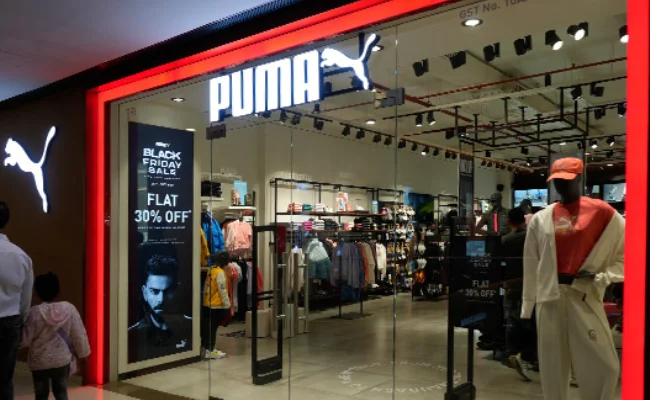
Puma is a well-established global sportswear brand with a large customer base and a strong retail presence in India. A Puma franchise lets you leverage brand recognition, stylish products, and sports lifestyle demand to build a profitable retail business. Puma continues to expand into Tier-1, Tier-2, and Tier-3 cities, offering growth opportunities for committed franchise partners.
💰 Investment Cost (INR)
The total investment to open a Puma franchise store in India depends on store type, location, and city. The following table gives a clear estimate:
| Expense Component | Approx. Range (INR) | Notes |
| Franchise Fee (one-time) | ₹10 L – ₹15 L | Rights to use the Puma brand |
| Store Setup & Interiors | ₹30 L – ₹60 L | Interiors, lighting, signage |
| Initial Inventory | ₹15 L – ₹30 L | Footwear, apparel stock |
| Working Capital | ₹10 L – ₹15 L | Staff, utilities, day-to-day costs |
| Total Estimated Investment | ₹50 L – ₹1.5 Cr+ | Depends on city & store size |
| Space Required | ~1,000 – 1,500 sq.ft + | High-visibility retail location |
📌 In premium malls or metro locations, real estate and fit-out costs may be higher.
💼 Franchise Fee & Royalty
📌 Franchise Fee
Puma typically charges a one-time franchise fee of about ₹10 Lakh – ₹15 Lakh for store rights and brand support.
📌 Royalty / Revenue Share
Royalty or revenue share varies by agreement. Some reports mention percentages between 5% to 15% of gross sales, depending on the retail model and negotiated terms.
Additionally, Puma may require a marketing contribution (often 2%–3% of gross sales) for national and regional campaigns.
📊 Profit Margin & ROI
Profitability in a Puma franchise relies heavily on location, footfall, product mix, and cost control.
📈 Typical Metrics
| Parameter | Estimate |
| Gross Margin | ~25% – 50% (varies by product) |
| Net Profit Margin | ~15% – 25% (industry average) |
| Monthly Revenue | ₹5 L – ₹20 L+ (location dependent) |
| Break-Even / ROI | ~18 – 36 months |
👉 Profit margins depend on sales volume, operating efficiency, and rental costs.
🏢 Space & Manpower Needs
📍 Space Requirements
| Store Type | Sq. Ft. Required |
| Standard Retail Store | 1,000 – 1,500 sq.ft (minimum) |
| Larger High-Street / Mall Outlet | 1,500 – 2,500 sq.ft+ |
Ideal locations are high foot-traffic commercial streets, malls, and premium shopping centres to maximise visibility and sales.
👥 Manpower Needs
- Staff: 8 – 12 employees, including sales associates, cashiers, and inventory helpers.
- Manager: Recommended for larger or high-volume stores.
🤝 Franchisor Support
Puma provides structured support to franchise partners, including:
✔ Site evaluation and store planning support
✔ Store design, branding, and visual merchandising guidelines
✔ Training for staff on product knowledge and customer service
✔ Inventory planning and supply chain support
✔ Marketing & promotional assistance
✔ POS & retail system integration guidance
This support is crucial for maintaining Puma’s global brand standards and customer experience.
👍 Pros & 👎 Cons
✅ Pros
✔ Global brand recognition — strong trust and demand.
✔ High-quality product range — footwear, apparel, accessories.
✔ Structured franchisor support reduces startup risks.
✔ Growing sportswear market in India offers expansion potential.
❌ Cons
❗ High initial investment — ₹50 L to ₹1.5 Cr+.
❗ Operational complexity — retail management and inventory control.
❗ Location dependence — sales highly tied to footfall quality.
❗ Royalty and marketing contributions reduce net profits.
📋 Eligibility Criteria
To qualify for a Puma franchise in India, you generally need:
✔ Investment capacity: ~₹50 L – ₹1.5 Cr+ available for setup and working capital.
✔ Commercial space access: 1,000 sq.ft+ high-footfall location (mall or high street).
✔ Business or retail experience: Preferred but not always mandatory.
✔ Strong credit profile & financial stability: Often required by franchisor.
✔ Commitment to Puma brand standards and customer service.
✍️ Application Process
Here’s a step-by-step overview:
- Initial Enquiry: Contact Puma India via official franchise page or authorised contacts.
- Submit Application & Business Profile: Include investment plan and location details.
- Site Evaluation: Puma assesses location viability and customer potential.
- Discussion & Agreement: Negotiate terms and sign a franchise agreement (often 5 years).
- Store Setup & Training: Complete fit-out, install systems and attend training.
- Launch & Marketing: Open the store with introductory promotions.
⚠️ Risks to Consider
✔ Real estate costs can vary and impact profitability.
✔ Inventory risk: unsold products tie up capital.
✔ Competition: other branded sportswear retailers also expanding.
✔ Market trends: demand can vary with fashion and seasonal factors.
❓ FAQs (Frequently Asked Questions)
Q1. How much does a Puma franchise cost in India?
A: Around ₹50 L – ₹1.5 Cr+ depending on store size and location.
Q2. What space is required?
A: Typically 1,000 – 1,500+ sq.ft in high footfall areas.
Q3. How long is the franchise agreement?
A: Usually 5 years, with renewal options.
Q4. Is prior retail experience necessary?
A: It’s beneficial but not always mandatory.
🏁 Conclusion
A Puma franchise in India offers a promising opportunity to partner with a global sportswear leader and capitalise on the growing retail demand for premium lifestyle products. While the initial investment is substantial, strong brand support, merchandising systems, and marketing backing can help you build a stable retail business over time. Success depends on choosing the right location, managing costs, and maintaining high service standards.