
The Lenskart franchise is a promising opportunity for entrepreneurs looking to enter India’s eyewear and optical retail business. Lenskart is one of India’s largest eyewear brands with a strong online + offline presence. This guide explains the investment cost (INR), franchise fee & royalty, profit margins & ROI, space and manpower needs, franchisor support, pros & cons, application process, documents, eligibility, risks, FAQs, and conclusion, in simple language with India-specific data.
🔎 What Is a Lenskart Franchise?
A Lenskart franchise lets you open and operate a branded eyewear store under the Lenskart name. Customers visit for eyeglasses, sunglasses, contact lenses, eye tests, accessories, and optical services. With its strong brand recall and technology-driven approach (like AI eye tests and virtual try-on), Lenskart aims to attract a wide customer base.
The franchise typically operates on a FOFO model — Franchise Owned, Franchise Operated — where you invest, manage the day-to-day operations, and benefit from Lenskart’s support and systems.
💰 Investment Cost (INR)
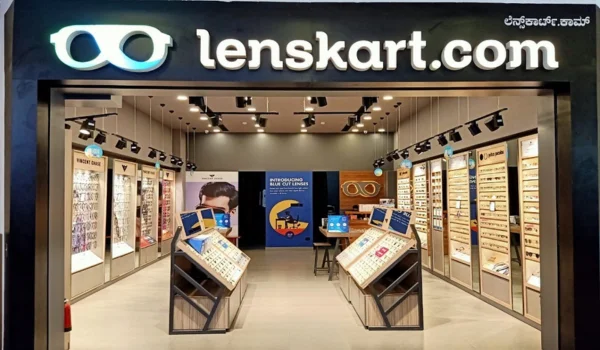
The total cost of starting a Lenskart franchise varies across sources and depends on store size, city tier, and working capital needs. Most credible estimates suggest that a practical setup requires planning for both capex (one-time setup) and opex (working expenses).
📊 Typical Investment Breakdown (Indicative)
| Cost Component | Estimated Amount (₹) | Notes |
| Franchise Fee | ₹2 – 5 lakh | One-time for brand license. |
| Store Interior & Décor | ₹10 – 25 lakh | Furniture, lighting, signage. |
| Equipment & Technology | ₹5 – 8 lakh | Eye-testing machines, POS, software. |
| Initial Inventory | ₹5 – 12 lakh | Frames, lenses, sunglasses. |
| Marketing & Launch | ₹2 – 3 lakh | Grand opening promotions. |
| Working Capital | ₹5 – 10 lakh | Rent, salaries, utilities for early months. |
| Total Estimated Investment | ₹30 – 50 lakh* | Depending on location and store format. |
💡 Most franchises budget ₹30 lakh to ₹50 lakh in total, including working capital for the first year.
🧾 Franchise Fee & Royalty
📍 Franchise Fee
This is a one-time license fee you pay to Lenskart to use the brand and access its systems. Most estimates place it in the ₹2 – 5 lakh range.
🔁 Royalty / Ongoing Fees
Lenskart typically charges a royalty of around 5 – 10% of gross monthly sales as an ongoing fee. This helps cover continued access to brand support, software, and marketing assistance.
Some estimates suggest this royalty also includes local marketing contributions.
📈 Profit Margin & ROI
The profitability of a Lenskart franchise varies with location, footfall, operational efficiency, and local competition. However, India-specific data helps set reasonable expectations.
📊 Profit & ROI Estimates
| Metric | Typical Range |
| Gross Margin (Product Sales) | ~30% – 40% |
| Net Profit Margin | ~20% – 30% |
| Average Monthly Sales | ₹6 – 12 lakh+ |
| Net Monthly Profit | ₹1 – 3 lakh+ |
| Break-Even Period | 18 – 36 months |
👉 Most franchised optical stores aim for steady sales of ₹6 – 12 lakh per month, with net profits of ₹1 – 3 lakh in good locations.
📌 ROI Timeline: Many stores reach break-even in about 18–36 months depending on operational control and customer traffic.
🏬 Space & Manpower Needs
📍 Space Requirements
- Minimum space: Around 300–500 sq. ft. for a basic outlet.
- Ideal space: High-footfall areas in malls, markets, or near hospitals/clinics.
- Larger stores can go up to 800 sq. ft. or more in premium locations.
Good visibility and convenient access strongly influence walk-in customers.
👥 Manpower Needs
- 3–5 staff typically required including:
- Store manager
- Sales associates
- Certified optometrist or eye-testing technician
- Staff training is usually supported by Lenskart.
🤝 Franchisor Support
Lenskart offers comprehensive franchisor support, which is a major benefit for new entrepreneurs:
✔ Site selection and design guidance – Helps choose the right location and layout.
✔ Training programs – For owners and staff on eyewear products, eye tests, customer service, and billing.
✔ Technology & software – POS systems, inventory management, digital CRM tools.
✔ Branding and marketing support – National campaigns and local launch promotions.
✔ Supply chain access – Continuous stock of frames, lenses, and accessories.
This end-to-end support helps reduce startup risk and operational challenges.
📝 Application Process
Here’s how to apply for a Lenskart franchise:
- Visit Official Lenskart Franchise Page – Use the form on their website to register interest.
- Initial Screening – Lenskart reviews your background, investment capability, and proposed location.
- Business Plan & Discussion – You discuss store format, location, and cost.
- Site Visit & Approval – Lenskart evaluates the proposed store location.
- Agreement & Fee Payment – Sign the franchise agreement and pay the franchise fee.
- Training & Setup – Attend training; set up the store interiors, equipment, and inventory.
- Launch & Operations – Open your store and start selling.
Setup Time: Usually 2–3 months from approval to launch.
📂 Documents Required & Eligibility
📄 Documents Checklist
- Identity Proof – Aadhaar Card, PAN Card
- Business Registration – Company or proprietorship details
- GST Registration
- Store Lease or Ownership Proof
- Passport-size Photos
- Bank Statements / Financial Proof
- Trade/Local Licenses (as applicable)
👤 Eligibility Requirements
✔ Indian citizen or resident with legal business status
✔ Financial capability to invest ₹30 lakh+
✔ Access to retail space in a high-footfall location
✔ Basic business knowledge & willingness to follow brand standards
✔ No strict prior optical experience required — training is provided
⚖️ Pros & Cons of Lenskart Franchise
👍 Advantages
✔ Strong brand with wide recognition across India.
✔ High demand for eyewear and eye care.
✔ Robust support from franchisor in training, technology, and marketing.
✔ Repeat business from regular eye exams and repeat purchases.
✔ Omnichannel customer base (online + offline synergy).
👎 Disadvantages
✘ High initial investment compared to small retail businesses.
✘ Ongoing royalty reduces net profit.
✘ Profitability heavily dependent on location and footfall.
✘ Operational costs (rent, salaries, inventory) can be high in metros.
⚠️ Risks to Consider
⚠️ Location Risk: Poor location can lead to slow sales.
⚠️ Competitive Market: Other optical brands and local stores compete for customers.
⚠️ Inventory Risk: Eyewear stocks may vary — proper planning is crucial.
⚠️ Royalty & Fees: Must be paid even in slow months.
⚠️ Compliance: GST, trade license, and retail regulations must be maintained.
❓ FAQs (Frequently Asked Questions)
Q1. What is the typical investment for a Lenskart franchise?
Most sources agree on a range of approximately ₹30 lakh to ₹50 lakh including setup & initial operations.
Q2. Is Lenskart franchise profitable?
Yes, with good location and management, profit margins of 20–30% and monthly net profits of ₹1–3 lakh are typical.
Q3. How much space is needed?
Typically 300–500 sq. ft. is required, though premium locations may need more.
Q4. How long before making profit?
Franchisees generally reach break-even in 18–36 months.
Q5. Do I need optical experience?
No — training and support from Lenskart covers most operational needs.
🏁 Conclusion
A Lenskart franchise is a solid business opportunity in India’s eyewear retail market, combining brand power, technology, and recurring customer demand. It requires a moderate to significant investment (approximately ₹30 – ₹50 lakh) but offers decent profit margins with the right location and operational focus. With strong franchisor support, training, and marketing, it suits entrepreneurs willing to run a retail-oriented, customer-service business. However, success depends on proper location choice, cost control, and effective staff management.