
Domino’s Pizza is one of India’s most popular quick-service restaurant (QSR) brands. Known for its pizzas, fast delivery, and strong marketing, it has become a household name across cities and towns. If you’re considering starting a Domino’s franchise in India, this guide explains everything you need — from costs to profits, space needs, support, risks, and FAQs — in simple, India-focused language.
📌 Why Domino’s Franchise in India?
Domino’s operates through Jubilant FoodWorks Ltd. in India and has one of the largest pizza networks in the country. Its success comes from strong delivery systems, digital ordering, frequent promotions, and a broad customer base. A franchise with Domino’s gives you brand recognition, proven systems, and continuous support that many independent food businesses lack.
💰 Domino’s Franchise Cost in India (INR)
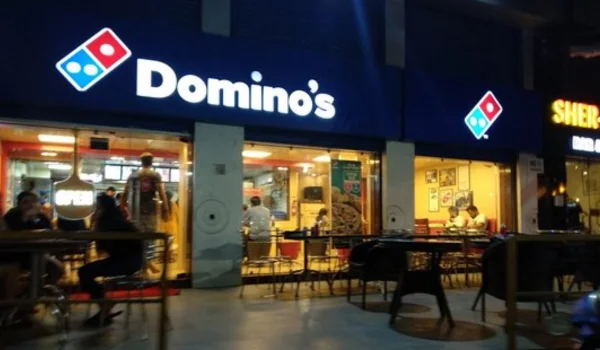
The exact cost varies by outlet type, location, and size. According to industry estimates, the total investment to open a Domino’s franchise typically ranges from ₹70 lakh to around ₹2 crore or more.
📊 Estimated Investment Breakdown
| Expense Component | Estimated Cost (₹) | Details |
| Franchise Fee | ₹25–₹50 lakh | One-time payment to operate the Domino’s brand. |
| Store Setup & Construction | ₹50 lakh–₹1 crore | Interiors, fit-out, signage. |
| Equipment & Kitchen Setup | ₹20–₹30 lakh | Ovens, refrigerators, POS systems. |
| Initial Inventory | ₹5–₹10 lakh | First batch of ingredients and packaging. |
| Marketing & Pre-Opening Promo | ₹5–₹10 lakh | Launch ads, banners, social promotion. |
| Working Capital | ₹10–₹15 lakh | Salaries, utilities, rent, first months’ expenses. |
| Total Estimated Range | ₹70 lakh – ₹2 crore+ | Based on store format & location. |
📍 Notes on Variation
- Smaller outlets or non-traditional formats (mall/food court/airport) may start toward the lower side of this range (₹30–₹80 lakh approx.).
- Larger dine-in or traditional delivery outlets often require investments closer to ₹1 crore or more.
- Real estate or rent is not usually included in these estimates and must be budgeted separately.
💼 Franchise Fee & Royalty
🔖 Franchise Fee
The franchise fee is a one-time payment that grants you the right to operate under the Domino’s brand. Industry estimates suggest a typical fee range of ₹25 lakh to ₹50 lakh.
💸 Royalty & Advertising Fees
Domino’s charges ongoing fees based on your sales:
- Royalty Fee: Around 5.5% of gross sales.
- Advertising/Marketing Fee: Around 4% of gross sales.
These are standard costs built into the franchise agreement and support national and regional marketing, brand campaigns, and business development.
📈 Profit Margin & ROI
📊 Profit Margins
Net profit margins for Domino’s franchises in India are generally cited at around 15%–25%, depending on sales volume, efficiency, and cost control.
📅 Return on Investment (ROI)
- Many outlets may break even in about 2–3 years with consistent sales and effective cost management.
- Some estimates suggest ROI might take 3–4 years for larger traditional outlets.
Profit depends heavily on location, customer traffic, delivery demand, and operational discipline.
📏 Space & Manpower Needs
🏢 Space Requirements
| Format | Approx. Area (sq. ft.) |
| Traditional Store (Delivery + Dine-in) | 800 – 2,000 sq. ft. |
| Non-Traditional (Mall/Airport/Food Court) | 400 – 1,000 sq. ft. |
| Delivery-Only Express | 200 – 600 sq. ft. |
Choosing a space with good visibility, high footfall, and easy access for delivery staff is essential for high sales.
👩🍳 Manpower Needs
A standard Domino’s outlet typically requires:
- Store Manager
- Kitchen Staff / Pizza Makers
- Delivery Executives
- Cashiers / Customer Service
- Support Staff (cleaning, helpers)
Staff requirements scale with outlet size and hours of operation.
🤝 Franchisor Support
Domino’s provides strong support to franchisees, which usually includes:
📌 Training
- Pre-opening training on operations and service protocols.
- Ongoing refreshers on quality and safety standards.
🧰 Operational Systems
- Access to Domino’s proprietary systems, point-of-sale (POS), and delivery tech.
- Help with menu management, pricing, and cost control systems.
📣 Marketing & Brand Support
- National campaigns, seasonal offers, and app-based promotions.
- Local launch support to drive customer awareness.
📦 Supply Chain
- Assistance in procuring quality ingredients and packaging through approved suppliers.
This support helps ensure consistency and reduces the learning curve for new entrepreneurs.
👍 Pros & 👎 Cons of a Domino’s Franchise
👍 Pros
✔️ Strong brand recognition — people know the Domino’s name and trust its products.
✔️ Proven business model with established delivery systems and digital ordering.
✔️ Multiple store formats — dine-in, delivery, express — to suit different markets.
✔️ Marketing support and running promotions helps drive customer traffic.
👎 Cons
❌ Significant upfront investment — may be high for small investors.
❌ Ongoing fees (royalty & advertising) reduce net margins.
❌ Profitability depends on location and operations, not guaranteed.
❌ Some online sources may offer unverified franchise leads — always check official franchise channels.
📝 Application Process in India
Here’s a typical step-by-step process to apply:
- Research & Contact: Reach out to Jubilant FoodWorks Ltd., the official franchisor for Domino’s in India.
- Submit Enquiry: Complete the franchise interest form with your details and investment readiness.
- Financial Review: Provide proof of funds and financial stability.
- Location Proposal: Share details of the proposed site and market potential.
- Evaluation & Interview: The franchisor reviews your business profile and may interview you.
- Approval & Agreement: Once approved, sign the franchise agreement.
- Training & Setup: Complete training, fit-out your space, hire staff, and stock inventory.
- Launch: Open your store with marketing support and start operations.
Always use official channels for applications and avoid third-party claims that may be inaccurate or fraudulent.
📄 Documents Required
Common documents typically include:
- Identity and address proof (PAN, Aadhaar)
- Financial statements / bank statements
- Business or company registration (if applicable)
- GST registration
- FSSAI license and food safety permits
- Lease agreement or property documents
- Business plan and location details
Exact requirements will be shared by Domino’s franchise development team as part of the process.
🧑💼 Eligibility Criteria
To qualify for a Domino’s franchise in India:
- Strong financial capability — enough to fund investment and working capital.
- Commercial space that meets brand guidelines.
- Some experience in food service or retail helps but is not strictly mandatory.
- Commitment to operational standards and customer service.
Meeting these criteria increases your chances of approval.
⚠️ Risks & Challenges
Franchising in India presents challenges, including:
- High setup costs and unexpected expenses.
- Competition from local and global pizza brands.
- Operational risks — staffing issues, inconsistent demand.
- External factors like inflation, rent increases, or supply disruptions.
- Misleading offers online — verify with official franchise teams.
Careful planning and realistic expectations are critical.
❓ Frequently Asked Questions (FAQs)
Q1. How much does a Domino’s franchise cost in India?
Typically ₹70 lakh to ₹2 crore+, depending on model and location.
Q2. What ongoing fees do I pay?
About 5.5% royalty and 4% advertising fees of gross sales.
Q3. How long till ROI?
Often around 2–3 years, but may be longer for larger outlets.
Q4. Do I need prior experience?
Helpful but not strictly required — training is provided.
Q5. Can I open a small delivery-only Domino’s?
Yes — smaller non-traditional or delivery formats require less space and lower investment.
📍 Conclusion
A Domino’s franchise in India can be a promising business if you prepare well, choose the right location, and manage operations effectively. The brand’s popularity, repeat demand for pizza, and established systems help reduce risks compared to starting a new standalone food business. However, it requires careful financial planning, disciplined execution, and adherence to franchise standards to succeed.