
If you’re an entrepreneur in India exploring fast-food franchise opportunities, a Burger King franchise often comes up as a leading option. Burger King is a globally recognized quick-service restaurant (QSR) brand known for flame-grilled burgers, fries, and a youthful customer base. In India, Burger King’s expansion is managed through Restaurant Brands Asia Ltd. (RBA), which holds the master franchising rights for the brand.
This detailed article explains the Burger King franchise cost in India, fees, profits, space and manpower needs, franchisor support, pros and cons, the application process, required documents, eligibility criteria, risks, and FAQs—all in simple English and with India-specific data.
📌 Burger King in India
Burger King entered India in 2014 and has since become one of the main players in the country’s fast-food industry. It competes directly with brands like McDonald’s, KFC, and Domino’s, offering a menu tailored to Indian tastes, including veg and non-veg burgers and combo meals. Burger King aims to leverage its global brand and modern QSR model to attract urban and young customers across major cities.
However, unlike smaller local franchises, Burger King requires serious financial commitment and strong business capabilities. It’s not an entry-level franchise opportunity but one suitable for seasoned investors or business owners.
💰 Investment Cost (INR)
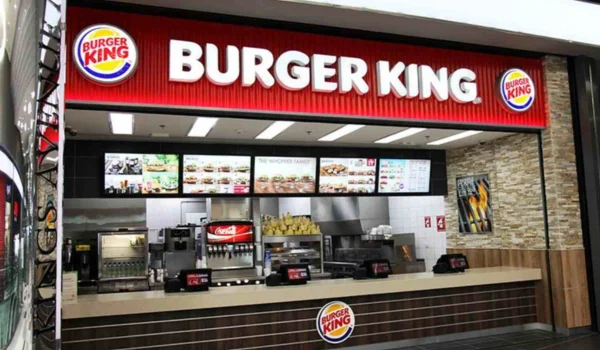
The total investment to open a Burger King outlet in India can vary widely based on location, outlet size, city tier, and format (standalone, mall, high street, etc.). Below is the typical investment range seen in the industry:
📊 Estimated Initial Investment
| Expense Component | Estimated Cost (₹) | Details |
| Franchise / Brand Fee | ₹11 lakh – ₹37 lakh | One-time fee to use the Burger King brand. |
| Store Setup & Infrastructure | ₹67 lakh – ₹6 crore | Interiors, construction, seating. |
| Kitchen Equipment & Technology | ₹35 lakh – ₹1 crore | Cooking, refrigeration, POS systems. |
| Initial Inventory | ₹5 lakh – ₹20 lakh | First stock of food and packaging. |
| Licenses & Legal Fees | ₹4 lakh – ₹22 lakh | Business permits, safety clearance. |
| Working Capital | ₹15 lakh – ₹67 lakh | Staff, rent, utilities before break-even. |
| Insurance, Pre-opening Wages | ₹6 lakh – ₹45 lakh | Staff training & business safety. |
| Total Estimated Investment | ₹2.5 crore – ₹10 crore+ | Depends on size & city. |
👉 Most credible sources place the initial investment between around ₹2.5 crore and ₹10 crore for traditional Burger King restaurants, with some large outlets or premium locations going beyond this range.
💼 Franchise Fee & Royalty
🔖 Franchise Fee
The franchise or brand access fee is a one-time payment to secure rights to operate under the Burger King name. In India, this typically ranges from ₹11 lakh to ₹37 lakh depending on negotiation, outlet size, and store format.
📊 Royalty & Marketing Fees
Once operational, franchisees usually pay:
- 📌 Royalty Fee: Around 4% – 4.5% of gross monthly sales.
- 📌 Advertising / Marketing Fee: Around 4% – 4.5% of gross sales contributed to national and local promotions.
These ongoing fees support brand campaigns, digital marketing, and operational tools designed to drive customer visits and improve sales.
📈 Profit Margin & Return on Investment (ROI)
📊 Expected Profit Margins
Fast-food QSR businesses like Burger King typically operate on:
- Gross Profit Margin: Often high (40%–50%) at the food cost level before other expenses.
- Net Profit Margin: After rent, staff, fees, and overheads, net margins often range 8% – 12% depending on operational efficiency.
📆 Return on Investment
- Break-Even Period: Many Burger King outlets may take 3–5 years to break even in high-footfall locations.
- ROI: Dependent on location, rent cost, and monthly sales volumes. Prime mall or high-street outlets usually recover investment faster due to higher footfall.
Note: These figures are indicative industry norms and not guaranteed. Real performance can vary widely based on market conditions and execution.
📏 Space & Manpower Needs
🏢 Space Requirements
Burger King outlets need ample customer space and kitchen area to handle dine-in and delivery traffic.
| Outlet Type | Approx. Space (sq. ft.) |
| Standalone Restaurant | 1,500 – 3,000 sq. ft. |
| Mall / Food Court | 800 – 1,800 sq. ft. |
| High Street Retail | 1,000 – 2,500 sq. ft. |
Prime locations such as malls, busy streets, transit hubs, and commercial zones bring higher footfall but also higher rents.
👩🍳 Manpower Needs
A typical Burger King outlet will need:
- Store manager and supervisors
- Kitchen staff (cooks, prep staff)
- Cashiers and customer service staff
- Cleaning and support personnel
Staffing numbers depend on outlet size and hours of operation. Well-trained staff is key for maintaining service quality and customer satisfaction.
🤝 Franchisor Support
Burger King provides significant support to franchisees, which usually includes:
- 🧠 Training Programs: Operational training for managers and staff.
- 🛠️ Store Planning: Help with layout, design, and kitchen setup.
- 📣 Marketing Assistance: National and regional promotional campaigns.
- 📦 Supply Chain: Access to approved suppliers for food, packaging, and equipment.
- 📊 Operational Systems: POS systems and performance tracking tools.
This support system helps maintain brand consistency and operational standards across outlets.
👍 Pros & 👎 Cons of a Burger King Franchise
👍 Pros
✔️ Strong Global Brand – Customers recognize and trust the name.
✔️ Proven Business Model – Effective systems for operations & marketing.
✔️ Wide Customer Base – Appeals to young and urban consumers.
✔️ Ongoing Corporate Support – Training, marketing, supply chain assistance.
👎 Cons
❌ High Upfront Investment – ₹2.5 crore and up, which may be out of reach for smaller investors.
❌ Ongoing Fees – Royalty and marketing contributions reduce net margins.
❌ Competitive Industry – Fast-food segment is crowded with local and international players.
❌ Market Sensitivity – Consumer spending patterns can impact sales.
📝 Application Process
Here’s a typical process to apply for a Burger King franchise in India:
- Initial Inquiry: Visit Burger King India/RBA franchise page and submit an enquiry form.
- Financial Review: Provide proof of funds and business background.
- Location Proposal: Share your proposed site and market potential.
- Franchise Evaluation: RBA reviews your profile, financial capacity, and location.
- Agreement Signing: If approved, sign the franchise agreement covering costs, terms, and responsibilities.
- Training & Setup: Attend training and prepare the outlet with franchisor support.
- Launch: Open your Burger King restaurant with launch promotions.
Always use official franchisor channels to avoid scams or misleading third-party pitches
📄 Documents Required
Typically, you will need:
- Identity & address proofs (PAN, Aadhaar)
- Financial statements / proof of funds
- Company / business registration documents
- Location lease or ownership papers
- GST, FSSAI, and trade licenses
Exact documents are shared by Burger King’s franchise team during the process.
🧑💼 Eligibility Criteria
To be considered for a Burger King franchise in India:
- Strong Financial Capacity: Liquid assets of several crore rupees.
- Relevant Experience: Prior business or management experience helps.
- Prime Location: A suitable high-traffic site.
- Operational Commitment: Willingness to follow franchisor standards.
Meeting these increases the chances of approval
⚠️ Risks & Challenges
Franchising with a global QSR brand also involves risks:
- High Capital at Risk: Large investment may tie up significant funds.
- Slow ROI: Recovery period may take several years.
- Market Changes: Consumer behaviour and economic factors can shift demand.
- Operational Pressure: Maintaining quality and consistency is demanding.
Do thorough due diligence before committing
❓ Frequently Asked Questions (FAQs)
Q1. How much does a Burger King franchise cost in India?
Typically between ₹2.5 crore and ₹10 crore+, depending on location and size.
Q2. What is the franchise fee?
Usually ₹11 lakh – ₹37 lakh one-time payment.
Q3. Are there ongoing fees?
Yes — approximately 4%–4.5% royalty and 4%–4.5% marketing fee of sales.
Q4. How long does it take for ROI?
Often 3–5 years, depending on location and sales volume.
Q5. Can a first-time entrepreneur get approval?
Possible, but strong finances and business acumen improve chances.
🏁 Conclusion
A Burger King franchise in India represents a premium QSR investment with brand strength, support structures, and proven operations. However, the high investment requirement, ongoing costs, and competitive market make it essential to plan carefully, assess locations wisely, and prepare for multi-year commitments to profitability.
If you’re serious about entering the fast-food franchise space, Burger King can be a rewarding venture with long-term potential—but it’s best suited to well-capitalised entrepreneurs with operational discipline and patience.