
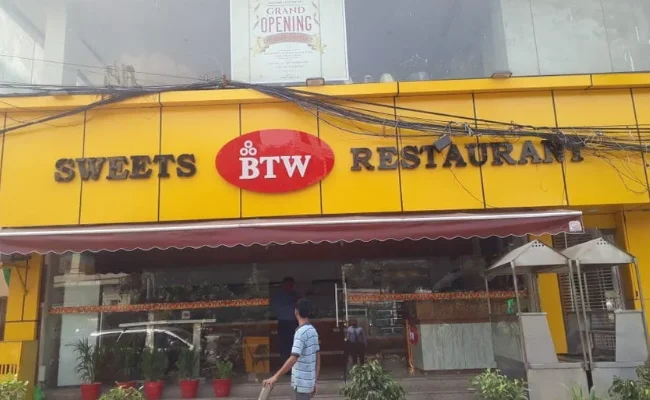
BTW (Bittoo Tikki Wala) is a well-known Indian street food and multi-cuisine restaurant brand that started in Delhi in 1991. It’s famous for its North Indian snacks, chaats, tikkis, and other traditional dishes with broad appeal across age groups. The brand has expanded via franchise outlets across India, offering franchisees a recognised name, menus, and systems designed for everyday food lovers.
Investment Cost (INR)
Estimated Investment Range
Setting up a BTW franchise involves a combination of franchise fee, infrastructure, equipment, initial inventory, and working capital. Total costs vary based on outlet size, location, and city tier.
| Component | Typical Range (₹) |
| Franchise/Brand Fee | ~₹3,00,000 |
| Infrastructure & Setup | ₹2 – ₹5 lakh |
| Equipment & Furniture | ₹2 – ₹5 lakh |
| Initial Inventory & Working Capital | ₹3 – ₹5 lakh |
| Total Investment | ₹15 lakh – ₹50 lakh+ (varies by outlet size and location) |
- Smaller outlets (cloud kitchen / express counters) may cost toward the lower end of this range.
● Full dine-in restaurants or larger units in premium locations can require higher investment up to ₹50 lakh or more.
Franchise Fee & Royalty
Franchise Fee
The one-time franchise or brand fee for a BTW outlet is typically around ₹3 lakh.
**Royalty & Revenue Sharing
BTW’s ongoing fee structure varies depending on the source:
- Some listings show a royalty of about 4% of monthly sales.
- Other industry sources suggest a revenue-sharing model where the franchisee retains 60%–65% of revenue, and the franchisor gets 35%–40% as commission (i.e., a kind of effective royalty).
👉 This means you should clarify the exact royalty/commission structure directly with BTW before signing any agreement.
Profit Margin & ROI
The profit you can earn from a BTW franchise depends on location, footfall, pricing, operational costs and menu mix.
Typical Profit Expectations
| Metric | Estimate |
| Net Profit Margin | ~20% – 25% (subject to costs & footfall) |
| Monthly Sales Example | ₹4 – ₹8 lakh (varies with location) * |
| Break-Even / ROI | ~1 – 3 years (typical for successful outlets) |
*Actual sales figures are examples and depend heavily on market demand and outlet execution.
With consistent sales and controlled costs, many BTW franchisees aim to recover their initial investment in 12–36 months.
Space & Manpower Needs
Space Requirements
| Outlet Type | Required Space |
| Express / Cloud Kitchen | ~500 – 800 sq.ft |
| Standard Restaurant | ~1000 – 1200 sq.ft |
| Large Dine-in Outlet | ~1500 – 2500 sq.ft+ |
BTW generally prefers stand-alone shops, malls, high streets, or food courts in busy commercial or retail zones.
Typical Staff Requirement
- Manager / Supervisor
- Kitchen staff (cooks, helpers)
- Service / Billing staff
- Cleaners & support workers
Small outlets might run with 3–6 staff, while larger restaurants could require 10–20 employees.
Franchisor Support
Good franchisor support is critical for franchise success. BTW provides:
✔ Site evaluation and setup guidance
✔ Menu planning and product standardisation
✔ Initial and ongoing training for staff and operations
✔ Branding, marketing support and promotional strategies
✔ Supply chain assistance for consistent food quality
✔ Operational SOPs & management support
Franchisor support reduces the burden of starting from scratch and helps maintain brand quality across outlets.
Pros & Cons of BTW Franchise
Pros
✔ Established homegrown brand with street-food appeal ✨
✔ Flexible outlet formats (express, dine-in, cloud kitchen)
✔ Potential 20% – 25% net profit margin with efficient operations
✔ Franchise systems reduce risk vs. starting an independent business
✔ Consistent menus with customer familiarity
Cons
❌ Investment varies widely by format and city
❌ Royalty/commission reduces share of revenue if structured high
❌ High competition in Indian F&B — especially street food & quick service
❌ Quality control and customer service require attention daily
Application Process
Here are typical steps to apply for a BTW franchise:
- Initial Inquiry: Contact BTW through official franchise enquiry channels or website.
- Submit Business Profile: Provide basic details, financial capacity, proposed location and experience.
- Site Evaluation: BTW reviews the proposed location for traffic, demographics and viability.
- Agreement & Terms: Discuss franchise fee, royalty/commission, outlet format, territory rights and agreement length.
- Signing & Payment: Sign franchise agreement and pay initial franchise/brand fee.
- Outlet Setup: Complete interior, kitchen equipment, staff hiring and training with BTW support.
- Launch: Open with marketing assistance and operational guidance.
📌 Typical agreement terms may include a 1-year franchise tenure with renewal options (depending on brand terms).
Risks to Consider
Investing in any franchise involves risks. For BTW consider:
⚠ Location Risk: A poor location with low footfall can significantly reduce sales.
⚠ High Operational Costs: Rent, staff salaries and commodity prices can affect margins.
⚠ Competitive Market: The Indian F&B sector is crowded with local and national brands.
⚠ Royalty/Fees: Revenue sharing can limit net income — negotiate and understand terms before signing.
⚠ Quality Control: Maintaining consistent food quality is essential for repeat business.
Conduct local market research and realistic financial planning before investment.
FAQs (Frequently Asked Questions)
Q1. How much does a BTW franchise cost in India?
A1: Total investment ranges from approximately ₹15 lakh to ₹50 lakh+ depending on outlet size and location.
Q2. What is the franchise/brand fee?
A2: Usually about ₹3 lakh (one-time) to use the brand and systems.
Q3. What is the royalty or revenue share?
A3: Some models charge ~4% royalty, while other structures allocate 35% to franchisor and 60–65% to franchisee revenue share.
Q4. How soon can I break even?
A4: Many franchisees aim to break even within 12–36 months with good location and management.
Q5. Do I need prior restaurant experience?
A5: No formal experience is required, but familiarity with food service or prior management experience helps.
Conclusion
The BTW franchise is a promising opportunity in India’s food and beverage sector, especially for entrepreneurs who love the street-food market. With investment ranging from ₹15–₹50+ lakh, strong franchisor support, and potential for healthy margins (~20%–25%), it suits both first-time owners and seasoned food business operators.
Success depends on choosing a high-footfall location, strong operational control, disciplined cost management, and excellent customer service. Always evaluate all costs — including franchise fees, infrastructure, working capital and ongoing royalty or revenue share — before signing the franchise agreement. With smart planning and hard work, a BTW franchise can grow into a rewarding business in India’s vibrant F&B landscape.