
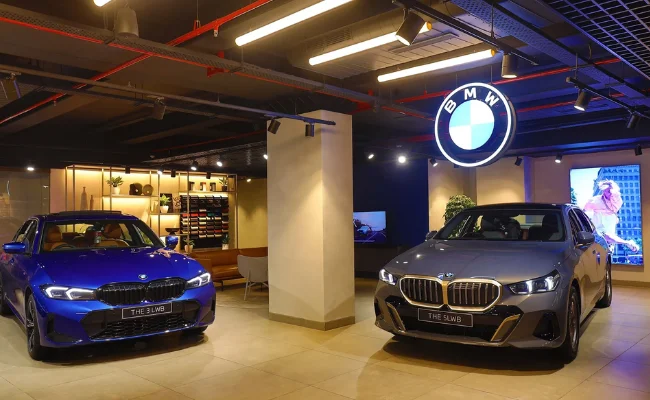
BMW, a global luxury automotive brand, operates in India through an authorized dealership model rather than a typical small-scale franchise. In practice, this means setting up a full-fledged BMW sales showroom, service centre, and parts outlet under strict brand standards as an official partner of BMW India.
A BMW franchise (dealership) allows you to sell BMW cars, offer after-sales services, and supply genuine parts — tapping into India’s growing luxury car market.
Investment Cost (INR)
Starting a BMW dealership requires a substantial investment due to the brand’s premium positioning.
Estimated Investment Breakdown
| Expense Component | Approx. Cost (₹) |
| Dealership Franchise Fee | ₹2 – ₹5 crore |
| Showroom Construction & Interiors | ₹10 – ₹20 crore |
| Service Centre Setup | ₹5 – ₹10 crore |
| Vehicle & Parts Inventory | ₹10 – ₹15 crore |
| Working Capital | ₹5 – ₹10 crore |
| Marketing & Launch Costs | ₹1 – ₹3 crore |
| Total Estimated Investment | ₹15 – ₹50+ crore |
👉 Depending on dealership format and city, total costs can range from ₹15 crore in emerging cities to ₹50 crore or more in premium metro markets.
Franchise Fee & Royalty
Franchise (Dealership) Fee
BMW typically charges a one-time fee as part of the authorization to operate under its brand. This is usually between ₹2 crore and ₹5 crore depending on location and dealership scale.
Royalty / Ongoing Fees
Unlike smaller retail franchises, BMW does not publicly report a simple royalty percentage; however, industry sources suggest a range of 5 % – 7 % on gross sales as ongoing support fees.
This covers access to the brand, training, global marketing support, and systems, but exact terms are agreed during partnership negotiations.
Profit Margin & ROI
Profitability in the luxury automobile dealership business comes from:
- New vehicle sales
- After-sales services (maintenance & repairs)
- Spare parts and accessories
- Certified used vehicle sales
Financial Estimates (Indicative)
| Metric | Typical Range |
| Annual Revenues | ₹50 – ₹300 crore (varies widely) |
| Net Profit Margin (Approx.) | ~10 % – 15 % (new & used sales + after-sales) |
| Break-Even / ROI Period | ~3 – 5 years* |
*Actual returns depend on location, customer base, operational efficiency, and volume. Luxury dealerships often take longer to break even than small consumer franchises.
BMW dealerships also benefit significantly from after-sales services, which often carry higher margins (up to 20 %–30 % on certain service items) compared with vehicle sales.
Space & Manpower Needs
Space Requirements
| Dealership Component | Recommended Space |
| Showroom Display Area | 8,000 – 10,000 sq.ft |
| Service Workshop Area | 10,000 – 15,000 sq.ft |
| Parts & Accessories Storage | 3,000 – 5,000 sq.ft (approx) |
Prime real estate in metro and Tier-1 cities is crucial for attracting luxury clientele and supporting after-sales traffic.
Manpower Needs
BMW dealerships typically need a larger professional team:
- Showroom Manager / GM
- Sales Consultants (Luxury Experience Team)
- Service Managers & Technicians
- Spare Parts Coordinators
- Customer Relations & Support Staff
Staffing levels often start at 15–25 employees and can go much higher depending on scale of operations.
Franchisor Support
BMW provides extensive support to its authorized partners:
✔ Staff training programs for sales & after-sales service
✔ Showroom design support according to global brand standards
✔ Marketing & promotional guidance
✔ Inventory supply systems and vehicle logistic coordination
✔ Technical assistance and diagnostic tools setup
Support helps maintain BMW’s global customer experience standards across India.
Pros & Cons of BMW Franchise
Pros
✔ High-end brand with strong market demand for luxury vehicles.
✔ Diversified revenue streams (sales + service + parts).
✔ Premium after-sales services can boost margins.
✔ Strong franchisor support systems for operations and training.
Cons
❌ Very high investment requirement (₹15 – ₹50 crore+).
❌ Stringent eligibility standards (financial & operational).
❌ Brand standards must be met continuously (design, service quality).
❌ Luxury automotive sales are cyclic and sensitive to economic shifts.
Application Process
Here’s a general path to becoming a BMW authorized dealer in India:
- Initial Inquiry: Contact BMW India’s official franchise/dealer relations team.
- Submit Business Profile: Include net worth proof, business experience, and proposed market/location details.
- Evaluation: BMW reviews financial eligibility and site potential.
- Location & Infrastructure Approval: Specific real estate and facility requirements must meet BMW global standards.
- Agreement & Fee Payment: Sign authorized dealer agreement and pay the requisite dealership fee.
- Setup & Training: Complete showroom and workshop setup with BMW guidance.
- Launch: Open dealership with simultaneous marketing and staff readiness.
Because BMW partnerships involve high standards and brand responsibility, the process can take several months.
Risks to Consider
⚠ Very high capital requirement: Only well-capitalised investors can qualify.
⚠ Economic sensitivity: Luxury car demand can fall in economic slowdowns.
⚠ Brand compliance costs: Maintaining global standards is expensive.
⚠ Location dependency: Profitability depends heavily on premium footfall in metro/Tier-1 cities.
FAQs (Frequently Asked Questions)
Q1. How much does a BMW franchise cost in India?
A: Typically ₹15 crore to ₹50 crore+, including infrastructure, inventory, and operational setup.
Q2. Is there a royalty fee?
A: BMW may charge an ongoing brand support fee (often ~5 %–7 %).
Q3. What net worth should I have?
A: Prospective dealers usually need a high net worth (e.g., ₹100+ crore) and liquidity to invest.
Q4. How soon can I break even?
A: Most dealerships target 3–5 years to break even with efficient operations.
Q5. Do I need experience in auto retail?
A: Prior automotive or luxury retail experience is highly preferred for operations and customer service excellence.
Conclusion
A BMW franchise (authorized dealership) in India represents one of the most prestigious and capital-intensive business investments in the automotive sector. With high initial costs ranging from ₹15 – ₹50+ crore, stringent eligibility criteria, and a long ROI period, it suits well-funded investors with industry experience or strategic partnerships.
The strengths of this model include brand prestige, diversified income streams (sales and service), and premium customer base, but success depends on selecting the right location, operational excellence, and long-term commitment to luxury standards.
With careful planning and realistic expectations, a BMW dealership franchise can be a profitable gateway to India’s luxury vehicle market — a place where product passion meets premium business strategy.