
In India, biryani is not just a dish—it’s an emotion. But for decades, biryani was either a street-side delight or a dine-in restaurant experience. Biryani By Kilo (BBK) changed this equation by asking a simple but powerful question:
Why can’t biryani be cooked fresh for every order and delivered in the same traditional way it is served at home?
That question led to one of India’s most successful cloud-kitchen-led biryani brands. Today, Biryani By Kilo is not just a food brand—it’s a case study in operational innovation, premium positioning, and scalable profitability.
In this article, I’ll break down BBK’s business model, revenue streams, cost structure, and the key reasons it makes money, in a clear, practical, and engaging way.
Introduction to Biryani By Kilo
Biryani By Kilo was founded with a unique idea: slow-cooked, dum-style biryani prepared fresh for every order, delivered in traditional handi (earthen pots). This immediately set BBK apart from mass-produced biryani brands.
The brand primarily operates through:
- Cloud kitchens
- Limited dine-in formats in select cities
- Online food delivery platforms
- Direct ordering via its own website/app
BBK’s positioning is clear—premium, authentic, freshly cooked biryani.
Understanding Biryani By Kilo’s Core Business Model
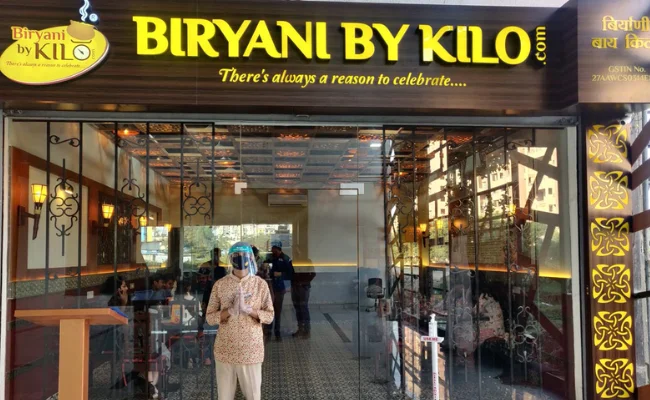
BBK follows a premium cloud kitchen + direct-to-consumer (D2C) model, built on five strong pillars:
- Fresh, Made-to-Order Biryani
- Premium Pricing Strategy
- Centralised Processes with Local Execution
- Digital-First Ordering
- Franchise-Driven Expansion
Instead of chasing mass volume, BBK focuses on quality, experience, and higher order value.
- Made-to-Order Biryani – The Brand’s USP
Unlike many biryani chains that rely on bulk cooking, BBK prepares biryani only after an order is placed.
Why This Matters:
- Preserves aroma and taste
- Justifies premium pricing
- Builds strong brand trust
- Reduces food wastage
Popular Offerings:
- Hyderabadi biryani
- Lucknowi biryani
- Kolkata biryani
- Chicken, mutton, and veg variants
- Family packs ordered by weight (½ kg, 1 kg, etc.)
👉 Business Impact:
Cooking by kilo increases order size and bill value, making each transaction more profitable.
- Premium Pricing – Fewer Orders, Higher Profits
BBK does not compete on price. Instead, it sells experience and authenticity.
Average Order Value (AOV):
- Significantly higher than mass biryani brands
- Often ₹800–₹1,500+ for family orders
Why Customers Pay More:
- Fresh cooking
- Traditional handi packaging
- Consistent taste
- Trusted brand promise
This premium pricing ensures healthier margins per order, even after delivery platform commissions.
- Add-Ons & Complementary Items – Margin Boosters
Biryani may bring customers in, but add-ons increase profitability.
High-Margin Add-Ons:
- Kebabs (chicken & mutton)
- Curries and gravies
- Desserts (phirni, gulab jamun)
- Beverages
- Extra salan and raita
These items:
- Have strong attachment rates
- Require minimal additional effort
- Significantly improve per-order profitability
- Handi Packaging – Experience as a Revenue Driver
BBK’s earthen pot (handi) packaging is more than branding—it’s smart business strategy.
Why Handi Works:
- Differentiates the brand visually
- Retains heat and aroma
- Adds perceived value
- Justifies premium pricing
In some cases, BBK charges a refundable deposit for the handi, which helps:
- Recover packaging costs
- Encourage repeat orders
- Cloud Kitchen Model – Lower Fixed Costs
BBK primarily operates through cloud kitchens, not expensive dine-in restaurants.
Benefits of Cloud Kitchens:
- Lower rent
- Smaller space requirement
- Reduced front-end staff
- Higher kitchen efficiency
This allows BBK to maintain profitability even with fewer orders, as overheads are tightly controlled.
- Franchise Model – Scalable & Asset-Light Growth
BBK has expanded rapidly using a franchise-led model.
How BBK Makes Money from Franchising:
- Initial Biryani by Kilo franchise fees
- Ongoing royalties
- Centralised supply of spices & SOPs
- Technology and branding support
Why Franchisees Join:
- Strong brand demand
- Clear differentiation
- Premium customer base
- Structured operations
This model helps BBK grow without heavy capital investment.
- Digital-First & Direct Ordering Strategy
BBK actively promotes ordering through:
- Its own website
- Brand app
Why This Is Important:
- Lower dependence on aggregators
- Higher margins on direct orders
- Better customer data
- Ability to run loyalty programs
Over time, this reduces commission costs and improves net profitability.
Cost Structure of Biryani By Kilo
Let’s understand where the money goes.
Major Cost Components:
- Raw Materials
- Premium basmati rice
- High-quality meat
- Ghee and spices
- Packaging
- Handi pots
- Secure delivery packaging
- Manpower
- Skilled kitchen staff
- Training for dum cooking
- Aggregator Commissions
- Swiggy / Zomato fees
- Marketing & Branding
- Digital ads
- Influencer campaigns
Despite higher input costs, BBK maintains strong margins through pricing power and operational discipline.
Profit Margins & Financial Performance
Industry estimates suggest:
- Gross Margin: 50%–60%
- Net Profit Margin: 18%–25% (for well-run outlets)
Profitability depends on:
- Order volume
- Delivery mix
- Rent efficiency
- Franchise vs company-owned model
Why BBK’s Business Model Works in India
- Premiumisation Trend
Indian consumers are willing to pay more for quality and authenticity.
- Family-Oriented Ordering
By-kilo pricing suits group and family meals perfectly.
- Strong Differentiation
Fresh dum cooking + handi delivery is hard to copy at scale.
- Cloud Kitchen Advantage
Lower fixed costs allow faster breakeven.
- Brand Trust
Consistency across cities builds loyalty.
Challenges Faced by Biryani By Kilo
Every strong model has challenges.
Key Challenges:
- Longer delivery time due to fresh cooking
- High meat price volatility
- Skilled manpower dependency
- Premium pricing limits mass adoption
However, BBK’s clear positioning helps it attract the right customer segment, not everyone.
Lessons for Aspiring Food Entrepreneurs
BBK offers powerful lessons:
- Differentiation matters more than discounts
- Experience can be monetised
- Cloud kitchens are powerful if executed well
- Premium Indian food has strong demand
- Systems and SOPs enable scalability
Final Thoughts
Biryani By Kilo is a shining example of how traditional Indian food can be transformed into a premium, scalable, and profitable business. By focusing on authenticity, fresh preparation, and smart pricing, BBK has carved a unique space in India’s crowded food delivery market.
It proves one important point:
👉 You don’t need to sell cheap to sell big—you need to sell better.
For anyone studying Indian QSR brands or planning a cloud kitchen venture, Biryani By Kilo’s business model is a masterclass in modern food entrepreneurship.