
Bikanervala is one of India’s oldest and most popular food brands, known for its traditional Indian sweets, namkeen, snacks, and vegetarian meals. Established decades ago, it now has outlets all over India and abroad. Many entrepreneurs choose its franchise because of strong brand recall, a diverse product range, and a proven business system in the food & beverage (F&B) sector.
A Bikanervala franchise lets you sell sweets, snacks, and full meal services under the brand name, alongside support from the franchisor.
Investment Cost (INR)
Estimated Franchise Investment (2026)
| Franchise Format | Approx. Investment (₹) | Typical Space (sq.ft) | Notes |
| Express/Kiosk QSR | ₹30 – ₹70 lakh | ~300 – 800 | Small outlet in malls/food courts. |
| Retail Sweets/Namkeen Shop | ₹70 – ₹90 lakh | ~800 – 1,000 | Larger sweet/snack retail counter. |
| Chat Café / Small Restaurant | ₹80 lakh – ₹1 crore | ~1,000 – 1,500 | Full menu plus seating. |
| Full-Service Restaurant | ₹1.5 – ₹2 crore+ | ~2,500 – 5,000 | Dine-in format in metro cities. |
👉 These are approximate figures and vary based on city, rent, interior style, and operational scale.
Franchise Fee & Royalty
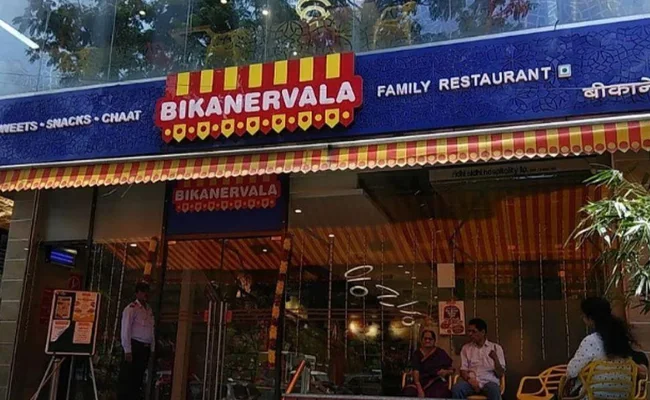
Franchise Fee
- Smaller formats (QSR/kiosk): ₹5 – ₹15 lakh.
- Larger retail outlets: ₹15 – ₹25 lakh.
- Full-service restaurant fees can be higher depending on negotiation and location.
Royalty
Most Bikanervala franchise agreements include ongoing royalty typically around 6 % – 8 % of gross monthly sales across models.
Royalty is paid for brand usage, marketing support, training, and systems access.
Profit Margin & ROI
Profitability depends on sales, location, costs, and operational control.
Revenue & Profit Snapshot
| Metric | Typical Estimate |
| Gross Margin | 40 % – 55 %* on products (snacks/sweets) |
| Net Profit Margin | ~12 % – 22 %* after expenses |
| Payback (ROI) | ~2 – 4 years in busy locations |
*These figures are indicative; actual margins vary by city, rent, marketing spend, and cost of goods sold.
Bikanervala benefits from multiple revenue streams — retail desserts, made-to-order foods, and packaged snacks — which can improve overall returns.
Space & Manpower Needs
Recommended Space
- QSR/Kiosk: 300 – 800 sq.ft
- Retail Sweet/Namkeen Shop: 800 – 1,000 sq.ft
- Small Restaurant: 1,000 – 1,500 sq.ft
- Full-Service Restaurant: 2,500 – 5,000+ sq.ft
Larger spaces are common in malls, high streets, or standalone areas with good footfall.
Typical Staffing
- Manager/Supervisor
- Chefs/Cooks
- Service staff
- Helpers/cleaners
Depending on outlet size, staff count can range from 5 to 25+ for larger restaurants. Higher staff costs will reduce net profit margins.
Franchisor Support
Bikanervala offers substantial support to franchise partners:
✔ Training on operations, quality, and service.
✔ Branding & marketing assistance.
✔ Supply chain access and vendor tie-ups.
✔ Menu planning & standards for consistency.
✔ Ongoing advisory support for operations.
This support is especially helpful for entrepreneurs new to the food & beverage industry.
Pros & Cons
Pros
✅ Strong brand recognition across India with loyal customers.
✅ Multiple franchise formats to fit different investment levels.
✅ Diverse product range — sweets, snacks, meals.
✅ Support systems for training and marketing.
✅ Potentially stable year-round demand, especially during festivals.
Cons
❌ High initial investment for larger formats.
❌ Ongoing royalty can affect monthly margins.
❌ Success strongly tied to location and footfall.
❌ Operational costs like rent and staff salaries can reduce net profit.
Application Process
Here’s a clear step-by-step process to apply for a Bikaner/Bikanervala franchise:
- Initial Inquiry: Reach out to the Bikanervala franchise team via the official contact form or email provided on their website.
- Business Profile Submission: Submit your background, financial details, and proposed location.
- Location Evaluation: The franchisor assesses your proposed site for footfall and viability.
- Agreement & Fees: Review terms and pay the franchise fee once approved.
- Setup & Training: Complete setup with brand guidelines and staff training.
- Launch Support: Bikanervala helps with marketing and launch promotions.
Always ask for a latest franchise kit and detailed financial model before signing.
Risks to Consider
⚠ Location Risk: Poor site choice may severely limit sales.
⚠ High Costs: Rent and utilities in premium areas can erode profits.
⚠ Seasonal Demand: Sales may fluctuate during off-season or monsoon months.
⚠ Staff Management: Recruiting and retaining skilled staff is critical.
⚠ Competition: Other local and national brands compete for customers.
Careful planning and realistic financial projections are essential to reduce these risks.
FAQs (Frequently Asked Questions)
Q1. What is the Bikaner franchise cost in India?
A: Investment varies by format: ₹30 – ₹70 lakh for kiosk/QSR, ₹70 – ₹90 lakh for retail outlets, and ₹1.5 – ₹2 crore+ for full restaurants.
Q2. How much is the franchise fee?
A: Typically between ₹5 – ₹25 lakh+ depending on franchise format and location.
Q3. Is there a royalty fee?
A: Yes, usually around 6 % – 8 % of gross sales.
Q4. How long does it take to break even?
A: Many outlets aim to break even in 2 – 4 years, though this depends on sales and costs.
Q5. Do they provide training?
A: Yes, training and operational support are part of the franchise package.
Conclusion
The Bikaner franchise (Bikanervala) is a well-established opportunity within India’s massive F&B sector, combining sweets, snacks, and casual dining. With various investment models — from kiosks to full-service restaurants — and strong franchisor support, it can suit different budgets and business goals.
However, the investment is significant for larger formats, and success depends largely on right location, cost control, and quality operations. Avoid exaggerated income expectations — plan carefully, research local demand, and review franchise terms before investing.