
The Indian stock market has exploded in popularity over the last few years. Millions of new Demat accounts are being opened, social media is filled with stock tips, and terms like “intraday trading,” “swing trading,” and “long-term investing” are everywhere.
But one question still confuses many beginners:
What is the actual difference between trading and investing?
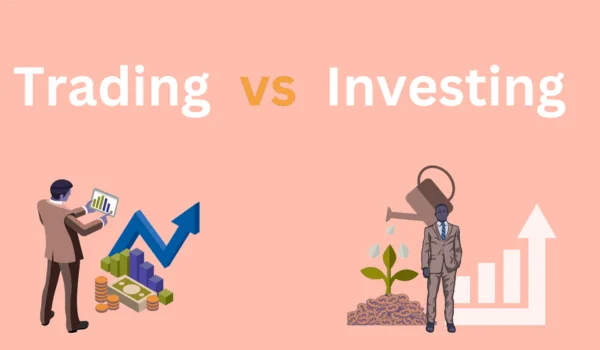
At first glance, both involve buying stocks and trying to make money. However, the mindset, strategy, risk, time horizon, and skill set required are completely different.
Understanding this difference is extremely important because many people enter trading thinking it is investing — or start investing with a trader’s mindset. That often leads to emotional decisions and financial losses.
In this detailed guide, we’ll break down:
- What trading means
- What investing means
- Major differences between the two
- Pros and cons of each approach
- Which strategy may suit different people
- Common beginner mistakes
- How Indians can choose the right path
Let’s simplify everything in plain language.
What Is Trading?
Trading means buying and selling financial assets like stocks, options, futures, or commodities within a shorter time frame to profit from price movements.
A trader focuses more on:
- Stock price movement
- Market trends
- Technical analysis
- Momentum
- Timing
The goal is usually to generate profits from short-term fluctuations.
Traders may hold positions for:
- Minutes (scalping)
- Hours (intraday trading)
- Days (swing trading)
- Weeks (positional trading)
For example:
A trader buys a stock at ₹500 expecting it to rise to ₹530 within a few days. Once the target is achieved, the trader exits the position.
The focus is not necessarily on the company’s long-term business quality.
What Is Investing?
Investing means buying assets with the intention of holding them for years to benefit from long-term growth.
Investors focus on:
- Company fundamentals
- Revenue growth
- Profits
- Management quality
- Industry potential
- Long-term economic trends
The goal is wealth creation over time through:
- Capital appreciation
- Dividends
- Compounding returns
For example:
An investor buys shares of Infosys or HDFC Bank and holds them for 10 years believing the business will continue growing.
Unlike traders, investors are less concerned about daily market fluctuations.
Difference Between Trading and Investing
Here’s a simple comparison table to clearly understand both approaches.
| Factor | Trading | Investing |
| Time Horizon | Short-term | Long-term |
| Goal | Quick profits | Wealth creation |
| Focus | Price movement | Business growth |
| Analysis Type | Technical analysis | Fundamental analysis |
| Risk Level | Higher | Moderate |
| Stress Level | High | Lower |
| Frequency | Frequent buying/selling | Occasional investing |
| Capital Requirement | Often higher | Flexible |
| Emotional Pressure | Very high | Comparatively lower |
| Compounding Benefits | Limited | Very powerful |
Types of Trading in India
Many beginners think trading is only intraday trading, but there are multiple styles.
- Intraday Trading
Positions are opened and closed on the same day.
Traders try to profit from small price movements.
High risk and high stress are common.
- Swing Trading
Stocks are held for a few days or weeks.
This style is popular among part-time traders.
- Scalping
Very short-duration trades, often lasting minutes.
Scalpers make many trades daily.
Requires extreme discipline and fast execution.
- Positional Trading
Trades are held for weeks or months based on broader trends.
This style combines trading and investing elements.
Types of Investing
Investing also has different approaches.
- Value Investing
Buying undervalued companies with strong fundamentals.
Popularized globally by Warren Buffett.
- Growth Investing
Investing in companies expected to grow rapidly.
Technology and renewable energy companies often fall into this category.
- Dividend Investing
Focusing on companies that consistently pay dividends.
Common among conservative investors.
- SIP Investing
Regular investments through Systematic Investment Plans in stocks or mutual funds.
Very popular in India.
Which Is Riskier: Trading or Investing?
Generally, trading is considered riskier.
Why?
Because short-term price movements are highly unpredictable.
A trader may face:
- Sudden volatility
- Emotional pressure
- Leverage risk
- News-based swings
- Frequent losses
Investing also carries risk, but long-term investors usually get more time for businesses to recover from temporary market declines.
Historically, long-term investing in quality companies has been less risky than aggressive short-term trading.
Why Many Beginners Lose Money in Trading
Trading looks attractive on social media because people often showcase profits, luxury lifestyles, and quick returns.
But the reality is different.
Many beginners lose money because of:
Lack of Risk Management
One bad trade can wipe out weeks or months of profits.
Emotional Decisions
Fear and greed dominate short-term trading.
Overtrading
Beginners often take too many trades.
Using Leverage Without Understanding Risk
Leverage increases both profits and losses.
Following Random Tips
Telegram and WhatsApp stock tips can be dangerous.
Why Long-Term Investing Works Better for Most People
For working professionals and beginners, investing is often more practical.
Reasons include:
Compounding
Compounding can turn small investments into large wealth over time.
Lower Stress
You don’t need to watch stock prices every minute.
Better Tax Efficiency
Long-term capital gains tax is usually more favorable than frequent trading taxation.
Wealth Creation
India’s stock market has historically rewarded patient investors.
Can You Do Both Trading and Investing?
Yes, many experienced market participants do both.
For example:
| Portfolio Type | Purpose |
| Long-Term Portfolio | Wealth creation |
| Trading Account | Short-term opportunities |
This approach allows investors to:
- Build stable long-term wealth
- Explore short-term market opportunities separately
However, discipline is essential.
Never mix trading capital with long-term investment capital emotionally.
How to Decide Whether Trading or Investing Is Right for You
The right choice depends on your personality, risk tolerance, and available time.
Trading May Suit You If:
- You enjoy market analysis
- You can handle stress
- You have time to monitor markets
- You understand risk management
- You accept short-term losses
Investing May Suit You If:
- You have a full-time job
- You prefer long-term wealth creation
- You want lower stress
- You believe in compounding
- You prefer patience over frequent activity
For most beginners in India, investing is usually the safer starting point.
Common Myths About Trading and Investing
Myth 1: Trading Is Easy Money
Reality: Successful trading requires deep skill, discipline, and emotional control.
Myth 2: Investing Requires Huge Money
Reality: You can start investing with small amounts through SIPs or fractional investing strategies.
Myth 3: Cheap Stocks Are Better for Trading
Reality: Price alone means nothing. Liquidity and volatility matter more.
Myth 4: Long-Term Investing Is Slow
Reality: Compounding over 10–20 years can create life-changing wealth.
Important Skills Needed in Trading and Investing
Skills for Traders
- Technical analysis
- Discipline
- Risk management
- Speed of execution
- Emotional control
Skills for Investors
- Patience
- Fundamental analysis
- Long-term thinking
- Portfolio diversification
- Understanding business models
Best Approach for Beginners in India
If you are new to the stock market, consider this approach:
- Start with investing
- Learn how businesses work
- Understand market cycles
- Build a diversified portfolio
- Practice risk management
- Explore trading later with limited capital
This reduces the chances of major losses early in your market journey.
Final Thoughts
Understanding the difference between trading and investing is one of the most important lessons for anyone entering the Indian stock market.
Trading focuses on short-term price movement and quick opportunities, while investing focuses on long-term business growth and wealth creation.
Neither approach is inherently “good” or “bad.” The right choice depends on:
- Your goals
- Risk appetite
- Time commitment
- Personality
- Financial knowledge
However, for most retail investors in India, disciplined long-term investing has historically been a more reliable path to building wealth.
The stock market rewards patience more consistently than excitement.
Before entering the market, ask yourself one simple question:
Are you trying to grow wealth slowly and steadily, or are you prepared for the fast-paced world of short-term trading?
Your answer will help define your investment journey.
 admin
admin