
In India’s food business, very few brands manage to turn a traditional street-side product into a scalable, organized brand. Kulfi, for decades, has been seen as a low-margin, seasonal dessert sold from handcarts. Chennai Kulfi changed that perception completely. It took a nostalgic Indian dessert and converted it into a premium-yet-affordable retail and franchise business.
As a business expert observing India’s QSR and dessert market closely, I find Chennai Kulfi fascinating because it proves that innovation does not always mean inventing something new—sometimes it means presenting the old in a smarter way. Let’s break down Chennai Kulfi’s business model and clearly understand how Chennai Kulfi makes money.
What Is Chennai Kulfi?
Chennai Kulfi is an Indian dessert brand known for:
- Handcrafted kulfis
- Natural ingredients
- Multiple Indian flavors
- Quick-serve dessert format
The brand operates through:
- Small retail outlets
- Kiosks and carts
- Franchise-based stores
- Online food delivery platforms
Chennai Kulfi focuses on impulse consumption, affordable indulgence, and high repeat purchases.
Core Idea Behind Chennai Kulfi’s Business Model
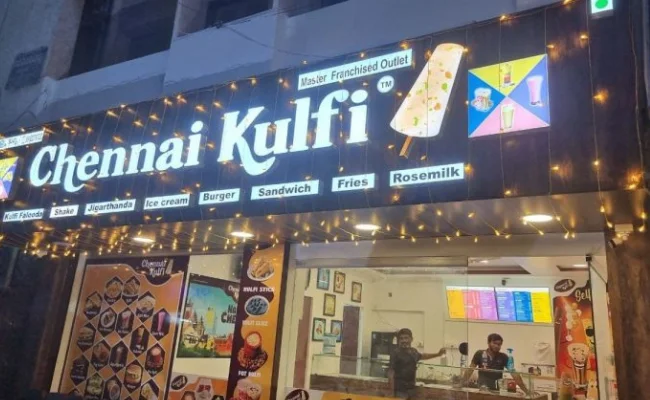
The core strength of Chennai Kulfi lies in standardizing a traditional dessert and selling it through a low-cost, high-volume retail model.
Instead of competing with premium ice cream brands, Chennai Kulfi positions itself as:
- Authentic
- Natural
- Desi
- Value-for-money
This positioning attracts both children and adults across income groups.
How Does Chennai Kulfi Make Money? (Clear Revenue Streams)
- Direct Sale of Kulfi Products (Primary Revenue)
The biggest source of income is the sale of kulfi sticks and kulfi desserts.
Popular products include:
- Malai Kulfi
- Kesar Pista Kulfi
- Mango Kulfi
- Chocolate Kulfi
- Seasonal specials
Kulfi prices are kept affordable, encouraging:
- Impulse buying
- Multiple-item purchases
- Family orders
👉 Kulfi sales contribute nearly 70–75% of total revenue.
- Franchise Model & Franchise Fees
Chennai Kulfi scales primarily through a franchise-based expansion model.
How the brand makes money from franchises:
- One-time franchise fee
- Mandatory product sourcing
- Equipment and setup support margins
- Brand royalty or supply margin
For the parent company, this is asset-light and scalable income.
- High-Margin Add-On Products
To increase ticket size, Chennai Kulfi sells:
- Kulfi falooda
- Sundaes
- Milkshakes
- Toppings and extras
These items have higher margins than basic kulfi sticks and boost per-customer revenue.
- Seasonal Demand & Festive Sales
Kulfi consumption peaks during:
- Summer months
- Festivals
- Evening hours
Chennai Kulfi leverages seasonality through:
- Limited-time flavors
- Combo offers
- Family packs
Seasonal spikes contribute significantly to annual profitability.
- Online Delivery & Party Orders
The brand is listed on:
- Swiggy
- Zomato
Online platforms bring:
- Bulk orders
- Office party orders
- Late-evening demand
Even with platform commissions, volume makes online sales worthwhile.
Cost Structure: Why Chennai Kulfi Is Profitable
One reason Chennai Kulfi works is cost discipline.
Major expenses include:
- Raw ingredients (milk, sugar, dry fruits)
- Freezers and storage
- Shop rent (small space)
- Staff (1–2 people)
- Electricity
There is:
- No complex cooking
- No skilled chefs required
- Minimal wastage due to frozen products
This results in healthy gross margins.
Location Strategy: Footfall Is Everything
Chennai Kulfi outlets are placed in:
- Busy markets
- Near schools and colleges
- Malls and food courts
- High-street evening zones
Kulfi is an impulse product, so visibility and accessibility drive sales more than advertising.
Marketing Strategy: Nostalgia + Visibility
Chennai Kulfi’s marketing relies on:
- Bright, clean branding
- Taste sampling
- Social media reels
- Word-of-mouth
The brand uses nostalgia as an emotional hook while maintaining hygiene and consistency.
Target Customer Segment
Chennai Kulfi appeals to:
- Families
- Children and teenagers
- Office-goers
- Evening snackers
Its affordable pricing ensures mass appeal, unlike premium ice cream brands.
Scalability of the Chennai Kulfi Business Model
The model is highly scalable because:
- Products are standardized
- Supply chain is centralized
- Outlet size is small
- Franchise investment is low
Many franchisees recover investment faster due to high daily footfall and repeat sales.
Challenges in Chennai Kulfi’s Business Model
Despite its strengths, challenges exist:
- Seasonality of demand
- Competition from ice cream brands
- Power costs for freezing
- Maintaining consistency across franchises
Strong operations and centralized supply help manage these risks.
Chennai Kulfi vs Traditional Kulfi Vendors
Compared to unorganized vendors:
- Better hygiene
- Brand trust
- Consistent taste
- Organized supply
Compared to ice cream brands:
- Lower prices
- Desi appeal
- Strong emotional connect
This middle-ground positioning gives Chennai Kulfi a unique advantage.
Why Chennai Kulfi’s Business Model Works in India
India loves:
- Traditional flavors
- Affordable indulgence
- Street food with hygiene
Chennai Kulfi checks all three boxes.
Final Thoughts
From a business expert’s perspective, Chennai Kulfi is a brilliant example of turning a humble Indian dessert into a scalable, profitable brand. It makes money by combining high-volume sales, low operational complexity, franchise-led expansion, and emotional branding.
The biggest lesson from Chennai Kulfi is simple:
You don’t need to sell luxury to build a strong food brand—sometimes, selling nostalgia with discipline is enough.
For aspiring entrepreneurs, Chennai Kulfi shows that India’s traditional foods still hold massive untapped business potential—if executed the right way.