
When Indians hear the name U.S. Polo Assn., most people instantly think of premium casual wear—polos, shirts, jeans, and a lifestyle that feels international yet familiar. Over the years, U.S. Polo Assn. has quietly become one of the most successful foreign-origin fashion brands in India, competing strongly with brands like Levi’s, Tommy Hilfiger, and Arrow.
From a business expert’s point of view, what makes U.S. Polo Assn. truly interesting is not just its popularity, but how cleverly it has adapted its global licensing model to Indian consumer behavior. Let’s break down the U.S. Polo Assn. business model and clearly understand how it makes money, especially in the Indian market.
What Is U.S. Polo Assn.?
U.S. Polo Assn. is the official brand of the United States Polo Association (USPA), the governing body of the sport of polo in the U.S. Importantly, U.S. Polo Assn. is not a luxury designer brand—it is a sports-inspired lifestyle brand.
In India, the brand is operated under license by Arvind Fashions, one of the country’s largest apparel companies. This licensing arrangement plays a central role in how U.S. Polo Assn. earns money globally and locally.
Core Idea Behind the U.S. Polo Business Model
At its core, U.S. Polo Assn. follows a brand licensing and lifestyle retail model.
The brand does not directly manufacture or retail products worldwide. Instead, it:
- Licenses its brand name and trademarks
- Partners with strong local operators
- Earns royalties and brand fees
- Scales globally with minimal asset ownership
In India, Arvind handles design adaptation, sourcing, manufacturing, retail, and marketing, while U.S. Polo Assn. benefits from brand monetization.
How Does U.S. Polo Assn. Make Money? (Clear Revenue Streams)
- Brand Licensing & Royalty Income (Global Level)
The primary way U.S. Polo Assn. makes money globally is through licensing fees and royalties.
Here’s how it works:
- The USPA owns the brand
- It licenses the brand to partners in different countries
- Licensees pay:
- Upfront licensing fees
- Ongoing royalty (a percentage of sales)
👉 This is a high-margin, asset-light revenue stream, because the brand owner does not manage stores or inventory.
- Product Sales Through Licensed Retail (India-Focused)
In India, revenue is generated through direct product sales handled by Arvind Fashions.
Products include:
- Polo T-shirts
- Casual and formal shirts
- Jeans and trousers
- Jackets and winterwear
- Footwear, belts, wallets, caps
Customers pay for products at:
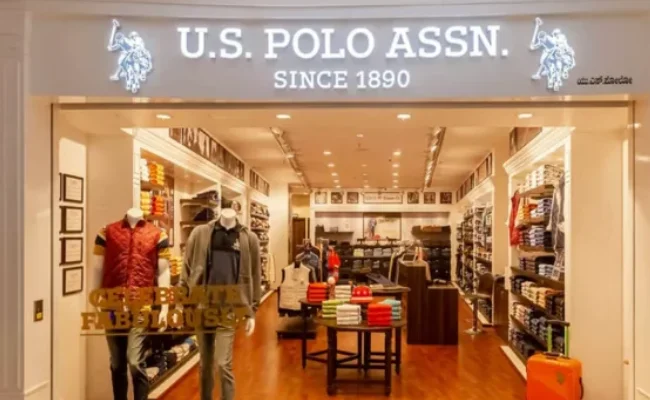
- Exclusive Brand Outlets (EBOs)
- Large-format stores
- Online platforms
👉 Product sales form the largest revenue base in India, even though royalties flow back to the brand owner.
- Exclusive Brand Outlets (EBOs)
U.S. Polo Assn. has a strong presence through exclusive brand stores across malls and high-street locations.
Why EBOs matter:
- Higher margins than wholesale
- Full control over brand experience
- Strong customer loyalty and repeat visits
Company-owned and franchise-led EBOs together generate consistent retail revenue.
- Franchise-Based Store Model
A large number of U.S. Polo Assn. stores operate on a franchise model.
How money is made here:
- Franchise partners invest in store setup
- They buy inventory from Arvind
- Brand earns margins on product supply
- Fixed costs are shifted to franchisees
This allows rapid expansion with lower capital risk.
- Online & Omnichannel Sales
Digital sales have become a major growth driver.
U.S. Polo Assn. products are sold via:
- Brand website
- Myntra, Amazon, Flipkart
- Omnichannel store-to-home models
Online sales:
- Improve reach beyond physical stores
- Help liquidate inventory faster
- Provide customer behavior data
Although marketplaces take commissions, volume and visibility offset margin pressure.
- Accessories & High-Margin Add-Ons
Accessories play a smart role in profitability.
These include:
- Belts
- Wallets
- Shoes
- Caps and socks
Accessories:
- Have lower production costs
- Carry higher margins
- Encourage impulse buying
They significantly improve average order value (AOV).
Cost Structure: Where Does the Money Go?
To understand profits, we must understand costs.
Major costs include:
- Fabric and manufacturing
- Store rentals and staff
- Marketing and promotions
- Inventory holding
- E-commerce commissions
However, U.S. Polo Assn. benefits from:
- Economies of scale
- In-house sourcing via Arvind
- Strong vendor networks
This keeps operating margins healthy.
Marketing Strategy: Aspirational but Accessible
U.S. Polo Assn. does not market itself as luxury—it markets aspiration with accessibility.
Key strategies include:
- Sport-inspired branding
- Youth-focused campaigns
- Seasonal collections
- Limited discounting to protect brand value
This allows pricing that is premium but not unaffordable, ideal for Indian middle and upper-middle-class consumers.
Target Customer Segment
The brand targets:
- Urban and semi-urban men and women
- Age group 18–40
- Middle and upper-middle-income buyers
Customers buy U.S. Polo Assn. because it represents:
- Global lifestyle
- Reliable quality
- Everyday premium fashion
This ensures high repeat purchases.
Why the U.S. Polo Business Model Works in India
From an Indian market perspective, the model works because:
- Indians love international brands
- Price positioning is sensible
- Product styles suit Indian climate and lifestyle
- Retail and online presence is balanced
The brand sits perfectly between mass and luxury.
Challenges in the U.S. Polo Assn. Business Model
Despite success, challenges exist:
- Intense competition from fast fashion
- Discount wars on marketplaces
- Changing youth fashion trends
- Rising retail costs
However, strong brand equity provides resilience.
U.S. Polo Assn. vs Other Lifestyle Brands
Compared to competitors:
- More affordable than Tommy Hilfiger
- More aspirational than local brands
- Less trend-driven than fast fashion
This balance makes it stable and long-lasting.
Final Thoughts
From a business expert’s point of view, U.S. Polo Assn. is a masterclass in brand licensing and localized execution. It makes money by combining global brand power, local manufacturing expertise, diversified retail channels, and disciplined expansion.
The biggest lesson here is clear:
You don’t need to be luxury to be premium—you need consistency, aspiration, and trust.
U.S. Polo Assn. proves that a well-managed brand can stay relevant, profitable, and scalable in India for decades.